War in the Middle East: how the conflict is affecting global air freight
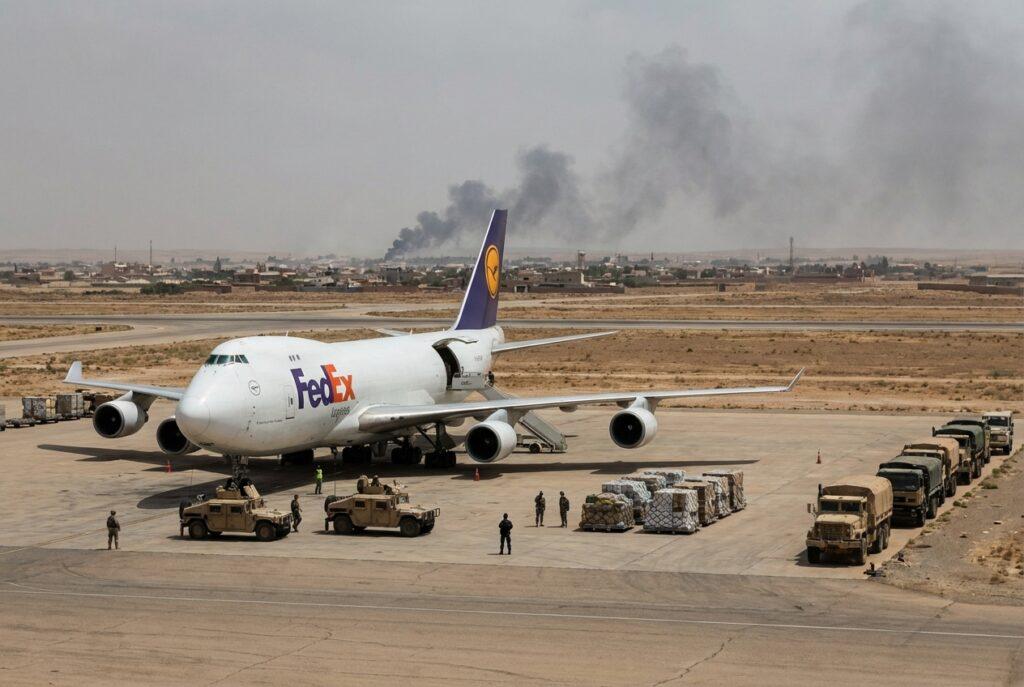
Visit war in the Middle East, in addition to its devastating impact on civilian populations, is putting considerable pressure on global air transport. The air freight, already strained by geopolitical tensions, is facing major disruptions, resulting in reduced capacity, higher operating costs, and the need for a new, more efficient and more efficient transport system. delivery delays and increased significant rise in costs for shippers and, ultimately, consumers.
The partial closure of major hubs in the Persian Gulf, and the restriction of overflights over vast areas, have disrupted the main freight corridor linking Asia to Europe. Key logistics hubs such as Dubai, Doha and Abu Dhabi, which play a central role in the global distribution of goods by air, have seen their operations suspended or drastically reduced. This paralysis directly affects thousands of tons of goods. It is important to note that Emirates, Qatar Airways and Etihad Airways, often referred to as the «three sisters» of the Gulf, together account for around 13 % of global airfreight capacity in normal times.
According to analyses by consulting firms specializing in the air transport sector, relayed by publications such as’Air Cargo Week, In the space of just a few days, global freight capacity fell by around 18 %. On the Asia-Middle East-Europe route, which is particularly dependent on the Gulf hubs, this drop can reach 26 % to 40 %. Freighters and airliner bunkers, which usually carry a substantial proportion of goods flows, were grounded or forced to take longer routes, increasing transit times.
Delayed parcels and blocked goods
For consumers in Europe, this situation is already translating into longer delivery times for many parcels, particularly those from Asian e-commerce. Shipments from platforms such as Shein, Temu and Amazon are directly affected, with goods piling up in warehouses in South and Southeast Asia due to the lack of available flights via the Gulf. Manufacturers have told Reuters that shipments of clothing destined for major retailers have been stuck in airports in Bangladesh and India for several days.
Vietnam, for example, reports «goods shortages and damage» in certain sectors, caused by delays, chaotic transport and cold chain breaks. Sectors most susceptible to these disruptions include fresh produce, medicines, electronic components and express shipments from e-commerce.
Sharp rise in costs for shippers
To get around conflict zones, airlines are forced to extend their routes, going further north or south. These detour increase flight times and, consequently, fuel consumption. Forwarding agents such as Metro and Bertling point out that «rerouting flights around conflict zones leads to a reduction in usable capacity, less efficient aircraft rotation and increased operational complexity».
Against this backdrop of reduced capacity, air freight rates are rising sharply. A number of customer memos refer to the emergence of «war risk surcharges» and «conflict surcharges», specific additional costs linked to the war context. The specialized site The Loadstar reports «marked increases in freight rates on the Asia-Europe route», while capacity via the Gulf has been «almost reduced by 40 %». These extra costs will inevitably end up being passed on to retail prices, particularly affecting low-value-added goods transported by air, such as fast-fashion clothing, small electronic equipment and products purchased on major e-commerce platforms.
For South Asia, the situation is particularly critical. More than half of Bangladesh's air freight, and a significant proportion of India's, usually transits via Gulf airlines. «All freight capacity is currently saturated on the airlines that are still operational, which is causing prices to soar,» warns an industry insider quoted by Reuters.
Faced with these challenges, many logisticians report having to divert part of their flows to alternative hubs in Europe or Asia. While this solution maintains continuity, it inevitably means longer lead times and greater uncertainty as to arrival dates. The use of sea freight is also an option for certain shipments, but this solution is not suitable for all types of goods, especially those requiring urgent delivery or specific preservation.
A crisis with lasting repercussions
Freight professionals believe that the impact of the current situation will be lasting as long as the Middle East airspace remains partially closed, even if certain hubs gradually reopen. APL Logistics anticipates persistent restrictions for several weeks, with «Gulf handling capacity potentially reduced from 70 % to 90 %» if tensions in the Middle East continue. Forwarders are advising shippers to anticipate longer lead times, adapt their supply chains and explore several scenarios and alternative routes. «All in all, we're worried: we see another major crisis looming on the world freight transport scene», sums up an executive from the Bangladesh Textile Exporters Association.
@Sydney Airport
Be the first to comment on this article