Flight Attendant or Flight Crew: How to Land the Job Despite the Shortage of Operational Profiles
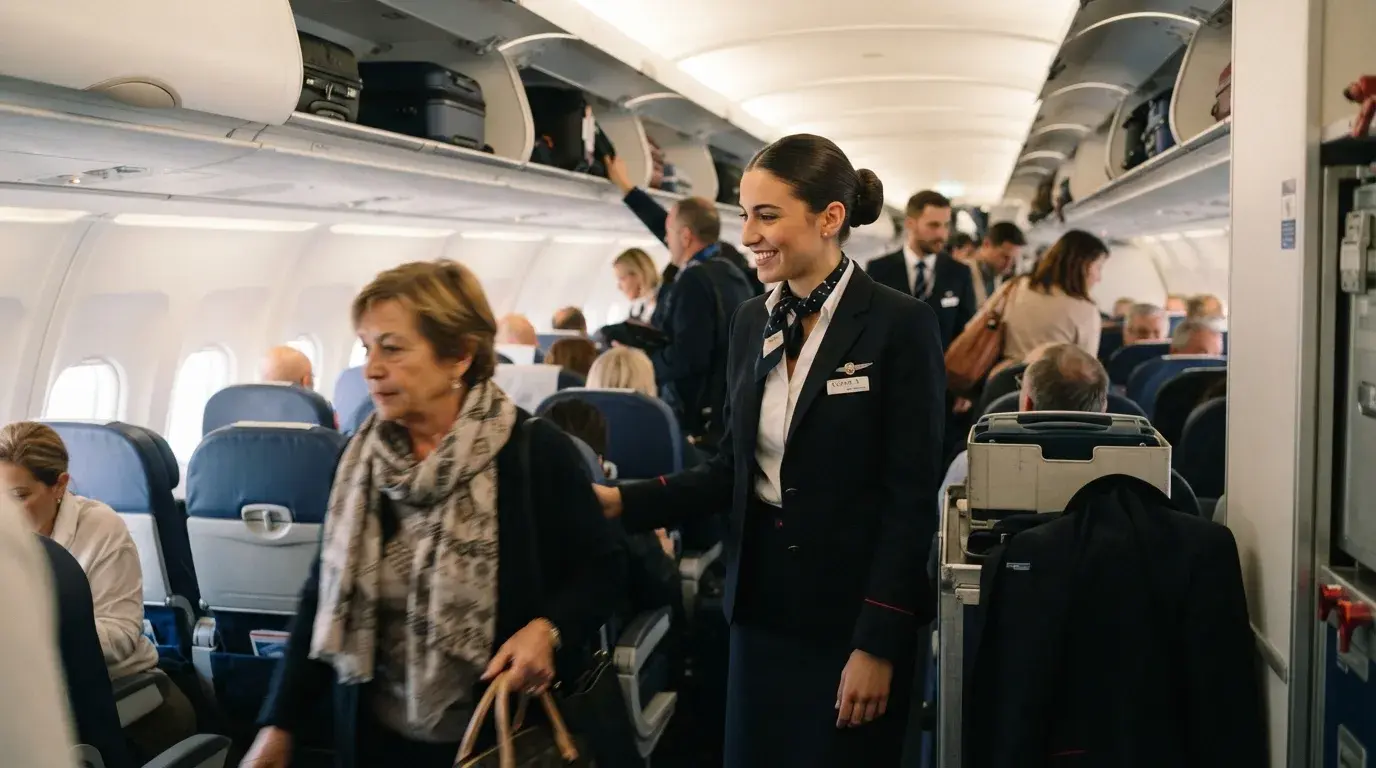
The aviation sector is experiencing unprecedented tension: the International Air Transport Association (IATA) forecasts over 5 billion passengers by 2026, a 2.4% increase from 2025. This rapid growth is driving record demand for flight attendants and flight crew, yet it also reveals a worrying paradox. Airlines are struggling to recruit immediately operational profiles, and the main reason is not a lack of candidates, but rather their insufficient English proficiency.
Recruiters are not short of positions to fill. According to Rémi Duchange, co-founder of SkySuccess, a specialist in preparing candidates for Cabin Crew Attestation (CCA) selections, “airlines are recruiting heavily, but candidates often speak English too imprecisely to be selected.” A former easyJet crew member, he notes that immediately operational profiles have become extremely rare and highly sought after. Airlines have tightened their requirements: a B1 level is no longer sufficient, and many now demand a C1 level—advanced mastery of the language, including oral expression and comprehension in complex contexts.
Yet, on a regulatory level, the process seems straightforward. In Europe, the CCA (Cabin Crew Attestation), or Cabin Crew Member Certificate, remains mandatory for flying with an approved airline. This certification, introduced in 2013 under the EU’s “Aircrew” regulation, is awarded after theoretical and practical training, validated by exams. However, candidates often realize too late that this certificate is not always required at the application stage. Many airlines, such as Ryanair, easyJet, or Volotea, train their recruits themselves and issue the CCA after hiring. Conversely, they consistently demand a high level of English, often verified during interviews.
For those who choose to prepare for the CCA before applying, the obstacles are numerous. DGAC-approved schools offer six-week theoretical training courses, followed by an average of four months for the practical component. A process that can take up to eight months. Yet recruitment windows are short: Air France received 3,000 applications in just four hours in early 2026. At French bee, sessions attract between 1,000 and 1,500 applications for only 15 to 20 positions. Another solution exists: obtaining the CCA from approved bodies in other EU countries, such as the Netherlands or Malta. These English-language courses run in intensive ten-day formats, allowing candidates to balance preparation with professional activity.
SkySuccess’s co-founder emphasizes a key point: “If you’re targeting as many airlines as possible, the priority is to learn English.” The organization’s figures speak for themselves: in 2026, 48 students were hired by Air France and HOP!, two-thirds of whom had a C1 level. Airlines prioritize the best linguistic profiles when refining their selections. A piece of advice that runs counter to common misconceptions: “You don’t quit your job. You improve your English and aim for the highest possible score while working.” A one- or two-year gap in your CV, spent unemployed preparing for the CCA, can work against you.
Airlines also seek transferable skills: “The key is to have six months to a year of customer service experience, speak English, and be mobile.” Sales, hospitality, or reception roles are major assets. Rémi Duchange cites the example of easyJet, which recruited heavily after the 2008 crisis, while most French airlines were not hiring. “Out of the 25 people in my cohort, only three or four of us have flown. Most waited for Air France.” His advice: “Cast a wide net, improve your English to the highest level possible, and work on your application and posture.”
Middle Eastern airlines, such as Etihad or Emirates, remain a path worth exploring. Recruitment sessions held in France allow applications, but the Cabin Crew Member (PNC) role is based in the United Arab Emirates. The job is well-paid but demands significant flexibility: “Many PNCs stay for three to five years to build savings. It’s a stepping stone.” SkySuccess claims over 1,800 students recruited and in service since its inception, with partnerships with a dozen airlines, including Ryanair, Volotea, Emirates, and Etihad. The organization trains students remotely in three stages: English, interview preparation, and optional CCA.
The PNC role remains highly attractive, despite physical demands: jet lag, prolonged standing, working weekends and holidays. A beginner earns from €1,867 gross per month at a low-cost carrier, according to Onisep. Major airlines pay around 30% more, with flight bonuses. With experience, it’s possible to progress to cabin chief, then principal cabin chief, or trainer. A career where mobility, rigor, and versatility are essential.
Why airlines prioritize English above all other criteria
The aviation sector is a world where English is the common language, regardless of the airport or airline. Operational manuals, safety procedures, briefings, and announcements are written in English. Insufficient mastery can compromise onboard safety and coordination with the technical crew. Airlines, especially low-cost carriers, cannot afford to train PNCs in English; they therefore prioritize candidates who are already operationally proficient in the language.
English tests, often conducted online or during interviews, assess listening comprehension, oral expression, grammar, and technical vocabulary. A B2 level may suffice for some airlines, but most now demand a C1 level, particularly for long-haul flights or international hubs. Candidates must therefore prepare for demanding assessments, including role-playing scenarios.
Training schools, such as SkySuccess, now include specific modules to improve candidates’ English proficiency. “We had 48 students recruited by Air France and HOP! in 2026, and two-thirds had C1 certification,” says Rémi Duchange. The organization offers intensive three-to-six-month courses, with a strong focus on oral expression and understanding of aviation procedures.
The CCA: a golden ticket that isn’t enough on its own
The CCA is mandatory for flying with European airlines, but it doesn’t guarantee employment. Airlines require it for regulatory reasons, but their priority remains the candidate’s immediate operational capability. “The CCA isn’t a barrier to entry, but a necessary step. Airlines want profiles that board and are immediately useful,” explains Rémi Duchange.
CCA training in France is lengthy and costly, and many candidates prefer to wait for a job offer to obtain the certificate. Airlines like Air France or HOP! train their recruits during the contract, reducing delays. Conversely, low-cost carriers such as Ryanair or Volotea often require candidates to already have customer service experience and a good level of English before applying.
For those opting to prepare for the CCA abroad, intensive English-language courses offer a quick solution. “This doesn’t force candidates to interrupt their studies or resign from their current jobs,” notes Rémi Duchange. Approved bodies across the EU offer ten-day intensive programs with validated learning outcomes.
The skills that make the difference
Beyond English, airlines seek versatile profiles capable of handling varied situations: difficult passengers, medical emergencies, onboard conflicts, or baggage management. Customer service experience in hospitality, sales, or reception is a major asset. “Airlines want people who can listen, reassure, and make quick decisions,” says Rémi Duchange.
Mobility is also a key criterion. PNCs must be prepared to relocate near airline bases, travel frequently, and accept irregular hours. Middle Eastern airlines, for example, seek profiles willing to relocate for several years. “It’s a professional step, but also a personal one. You need to be ready to live far from family and friends for years,” explains Rémi Duchange.
Soft skills, such as stress resilience, teamwork, and adaptability, are also highly valued. Airlines organize assessment centers where candidates are evaluated on their ability to handle real-life scenarios. These tests are often more decisive than the CCA or English level.
Candidates must therefore prepare for a demanding journey where training, experience, and transferable skills are as important as diplomas. Airlines are no longer recruiting “ready-made” profiles, but individuals capable of quickly adapting to their operational environment.
How to maximize your chances of success
To maximize your chances of landing a PNC role, meticulous preparation is essential. Here are the key steps to follow:
Step 1: Improve your English
A C1 level is now the standard for most airlines. Candidates must invest in intensive training, whether in-person or online. Organizations like SkySuccess offer tailored programs with a focus on oral expression and understanding of aviation procedures. “Airlines want candidates who speak English fluently, without hesitation, and understand technical nuances,” says Rémi Duchange.
Step 2: Gain customer service experience
Experience in sales, hospitality, reception, or tourism is a major asset. Airlines seek profiles capable of handling complex passenger situations. “Customer service skills are as important as English. Airlines want people who can listen, reassure, and resolve issues quickly,” explains Rémi Duchange.
Step 3: Prepare for assessment centers
Airlines organize assessment centers where candidates are evaluated on their ability to handle real-life scenarios. These tests include teamwork exercises, decision-making under pressure, and conflict management. “You need to prepare for these assessments, which are often more decisive than diplomas or the CCA,” notes Rémi Duchange.
Step 4: Apply to the right airlines
Low-cost carriers like Ryanair, easyJet, or Volotea recruit heavily but require immediately operational profiles. Major airlines, such as Air France or HOP!, offer in-house training but have highly competitive selection processes. Middle Eastern airlines, like Emirates or Etihad, offer attractive salaries but require expatriation. “You need to target airlines based on your profile and ambitions,” advises Rémi Duchange.
Step 5: Train for the CCA if necessary
The CCA remains mandatory for flying in Europe but can be obtained after hiring. Intensive training abroad, such as in the Netherlands or Malta, offers a quick solution for eager candidates. “The CCA isn’t a barrier to entry, but a necessary step. Airlines want profiles that board and are immediately useful,” says Rémi Duchange.
By following these steps, candidates significantly increase their chances of securing a PNC role. The aviation sector offers exciting opportunities but demands rigorous preparation. With the right strategy, it’s possible to land a PNC position and build a rewarding career in this demanding field.
Hiring prospects for the coming years
The aviation sector continues to grow, despite economic and geopolitical challenges. IATA forecasts over 5 billion passengers by 2026, with sustained demand for long-haul and medium-haul flights. This growth is putting pressure on airlines, which must recruit heavily to meet demand.
Low-cost carriers, such as Ryanair or easyJet, lead recruitment efforts, with hundreds of positions available each year. Major airlines, like Air France or Lufthansa, are also recruiting heavily but with stricter criteria. Middle Eastern airlines, such as Emirates or Etihad, offer attractive salaries but require expatriation and significant flexibility.
Prospects are also strong for experienced profiles capable of handling complex onboard situations. Airlines seek PNCs who can make quick decisions, manage medical emergencies, and maintain high service standards despite operational constraints. “The PNC role remains a fascinating but demanding career. Candidates must be prepared to give 100%,” says Rémi Duchange.
With the right preparation and a tailored strategy, it’s possible to secure a position in this expanding sector. Opportunities abound, but competition is fierce. Candidates must prepare meticulously, targeting airlines and training programs that align with their profile.
Be the first to comment on this article