AirAsia 2028: Higher Fares, Reduced Network, but A220s to Revitalize Asia
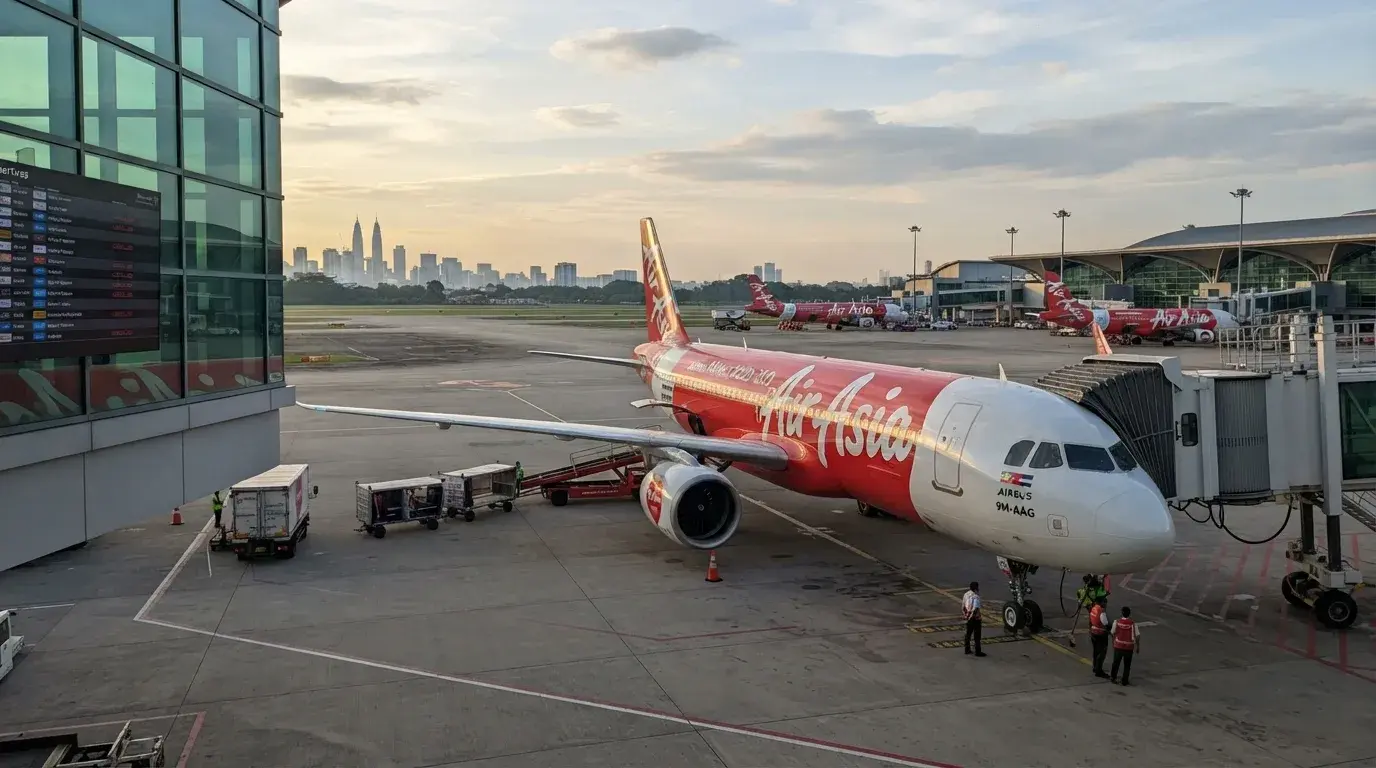
The skies over Southeast Asia are facing turbulence. Following a €176 million loss in Q2 2026, AirAsia Group is implementing radical measures to stabilize its operations: reduced capacity, higher fares, and accelerated fleet renewal. These adjustments come amid soaring jet fuel prices and a strategic shift for the Malaysian low-cost carrier, historically known for aggressive pricing and a dense regional network.
The group reported revenue of €1.08 billion between April and June 2026, a slight 1% decline year-on-year. This result was achieved despite an 11% reduction in capacity, measured in available seat kilometers. AirAsia is now prioritizing flight yield over volume—a stark departure from its long-standing mass-market model. The €176 million net loss was largely driven by a 58% surge in jet fuel costs, averaging $183 per barrel in Q2. The group partially offset this by raising fares and applying fuel surcharges, boosting revenue per available seat kilometer (RASK) by 11% to 21.28 sen (approximately 4.5 euro cents).
This pricing strategy took full effect in May and June, with average fares rising over 20% year-on-year. However, some seats had already been sold before costs spiked, limiting the impact of these adjustments. To absorb the shock, AirAsia suspended unprofitable Malaysian long-haul routes and delayed the launch of its Bahrain hub. Subsidiaries in the Philippines and Indonesia will also see fleet reductions, as the group focuses resources on high-yield domestic and intra-ASEAN routes where demand and yields are stronger.
Capacity cut by 20%–25% this summer, but ambitious recovery plan
AirAsia plans to reduce capacity by 20% to 25% in Q3 2026 compared to the same period in 2025. This decision aligns with a strategy to protect margins during a traditionally weaker period for regional traffic in Southeast Asia. Management expects a rebound in Q4, with gradual capacity restoration to capitalize on year-end demand. Early bookings on the core ASEAN network are reportedly on par with 2025 levels—a positive sign for the airline.
Bo Lingam, CEO of AirAsia Group, summarized the situation, stating: « We view Q2 2026 as our trough quarter. We do not expect jet fuel prices to remain at the extreme $183 per barrel level observed during this period. » This reflects the cautious approach of leadership amid ongoing economic uncertainty.
On the fleet front, AirAsia plans to return 25 older aircraft in 2026 to reduce fixed lease costs and align capacity with a more selective strategy. However, the group remains committed to long-term growth, with the first Airbus A220 and A321XLR aircraft expected from 2028. The A220 will enable better adaptation to secondary regional markets, while the A321XLR will open opportunities for longer-range medium-haul routes with competitive unit costs.
AirAsia had previously placed a firm order for 150 A220-300s—the largest order ever for the type. After aiming for a full operational recovery by summer 2026, the group is now adjusting its strategy in response to the energy crisis: fewer seats, higher fares, and a sharper focus on the most profitable routes.
A model in transition: survival and revival
This shift marks a turning point for AirAsia, which built its reputation on an ultra-aggressive low-cost model. The carrier was once a symbol of air travel accessibility in Southeast Asia, with fares sometimes below €20 for domestic flights. However, surging fuel costs and intensifying competition have undermined this strategy. In 2026, AirAsia must balance profitability, cost reduction, and technological innovation to survive in a rapidly evolving market.
The airline is betting on technological renewal to improve operational efficiency. The introduction of the A220 and A321XLR is expected to reduce fuel consumption per passenger while offering greater flexibility on less-served routes. These aircraft are also quieter and emit less CO₂, aligning with growing pressure on airlines to reduce their environmental footprint.
Yet, this transition won’t be seamless. Southeast Asia’s aviation sector remains highly competitive, with players like AirAsia, Lion Air, Scoot, and Jetstar Asia vying for the same markets. Reducing capacity could also lead to market share losses for AirAsia, which will need to rely on customer loyalty and service quality to offset these adjustments.
For travelers, this shift means higher fares overall, but also a more targeted and potentially better-adapted offering. Long-haul Malaysian routes, for example, may disappear in favor of more profitable connections, such as those linking major ASEAN cities or key tourist destinations.
What this strategy means for your next trip to Southeast Asia
If you’re planning a trip to Southeast Asia in 2026 or 2028, here’s what this strategic shift could mean for you:
Higher fares, but a more selective offering
AirAsia’s ticket prices are expected to rise, particularly on long-haul and less-profitable routes. However, the airline promises better alignment between supply and demand, with better-filled flights and more tailored services. Travelers should book early and compare options to secure the best fares.
Reduced service on certain routes
Long-haul Malaysian routes and some secondary connections may be suspended or reduced. AirAsia will focus on high-yield domestic routes in Malaysia, Indonesia, and the Philippines, as well as major tourist destinations in the region. If traveling to less-served destinations, check flight availability and consider alternatives.
The arrival of A220s and A321XLRs: a technological revival
AirAsia’s new aircraft, including the A220 and A321XLR, promise improved onboard comfort, lower fuel consumption, and enhanced connectivity. These planes are also quieter, potentially making flights more pleasant. For travelers, this means shorter routes, fewer delays, and better operational reliability.
Intensified competition and strategic partnerships
AirAsia faces fierce competition in Southeast Asia. To stand out, the group may strengthen partnerships with local or international players, such as booking platforms or loyalty programs. Travelers could benefit from targeted promotions or enhanced services, such as expanded baggage options or improved in-flight offerings.
In summary, AirAsia is at a crossroads. The airline must balance cost reduction, fare increases, and technological innovation to survive in a rapidly changing market. For travelers, this means changes in offerings and pricing—but also an opportunity to explore new routes and revamped services. If you’re planning a trip to Southeast Asia, keep an eye on AirAsia’s announcements and compare options to make the most of this new era.
Learn more
To follow AirAsia’s evolving strategy and explore its new offerings, visit the airline’s official website. There, you’ll find up-to-date information on fares, available routes, and services.
Be the first to comment on this article