Air Safety: The SAS Missed Incident at Brussels Airport and its Implications
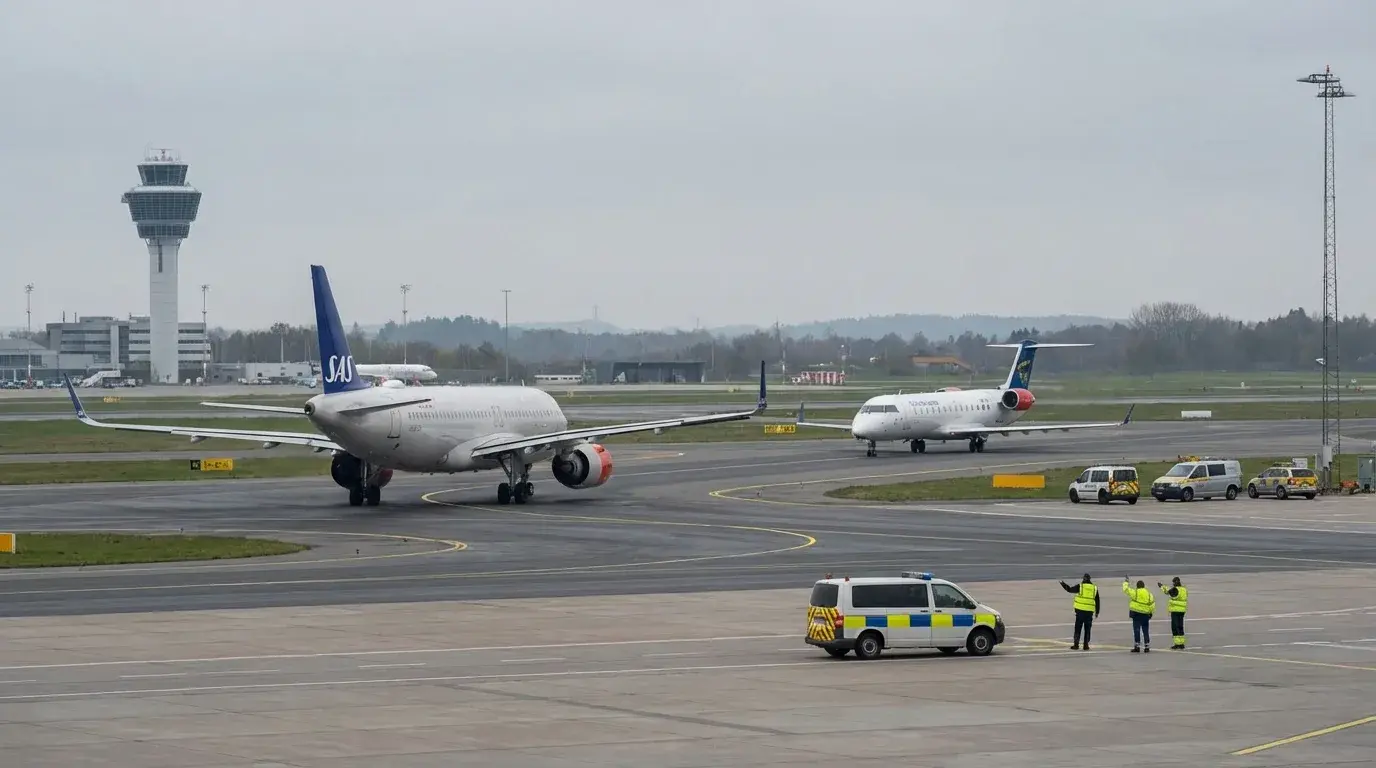
The world of air transport, although renowned for its reliability and rigor, is not free from incidents. On February 5, 2026, Brussels Airport was the scene of an event that could have had dramatic consequences: an Airbus A320neo belonging to SAS, en route to Copenhagen, mistakenly lined up on a taxiway instead of the runway. This incident, described as serious, raises crucial questions about the safety of ground operations and crew vigilance in complex airport environments.
A perilous taxiway alignment
SAS flight SK2590, carrying passengers, was cleared to take off from runway 07R at Brussels Airport. However, the crew took a wrong turn, entering taxiway E1, a lane parallel to the runway. The aircraft began its take-off roll, reaching a speed of around 190 km/h, before the crew realized the confusion. Emergency braking was initiated, leading the aircraft to leave the taxiway and come to rest in the grass, not far from the airport fence and sensitive areas such as fuel tanks.
Immediate reaction and assessment
Fortunately, there were no casualties. All passengers and crew were evacuated unharmed. The aircraft, although braked at high speed, remained intact. The flight to Copenhagen was cancelled, and passengers were redirected to other flights. The authorities quickly secured the area, and the federal police intervened to provide psychological support.
Impact on airport traffic
Although the main runway remained operational, the incident caused temporary disruptions. Some taxiways were closed, and some departures were diverted from runway 07R to 07L as a precautionary measure, while the area was secured and cleared.
Investigation: understanding human or systemic error
The Belgian civil aviation authorities, through the AAIU Belgium (Air Accident Investigation Unit), immediately launched an investigation to determine the exact causes of this serious incident. Several hypotheses are being considered:
Potential contributing factors
Investigators will be looking closely at a number of factors that could have led to this critical error:
Crew navigation error
The first avenue explored was a navigation failure on the part of the ground crew. In a complex airport environment like Brussels Airport, especially at night, maximum concentration is required to follow the control tower's instructions and ensure correct alignment with the take-off runway.
Failure to understand instructions
Misinterpretation of instructions by the crew or ambiguous communication with air traffic control could also be to blame. Clear and precise communication is essential in air traffic management.
Environment and signage
The nighttime environment, weather conditions, and the configuration and legibility of taxiway lighting and signage could all have played a part. Brussels Airport is known for its complex taxiway network, with multiple intersections requiring extra vigilance on the part of pilots.
Official statements and cooperation
SAS has confirmed the incident, reaffirming that safety is their top priority and that a thorough internal investigation is being carried out in cooperation with local authorities. This commitment to understanding the workings of the event is essential to prevent future incidents.
Brussels Airport's complexity: a constant challenge
The incident highlights the operational challenges specific to certain airports. Brussels Airport, with its dense network of taxiways around runway 07R/25L, requires constant attention. Previous reports, such as that of Skeyes in 2024, had already highlighted the need to maintain vigilance over ground movements and runway incursions, even if overall statistics remained contained.
Towards technological and organizational solutions?
This event could rekindle debate on the effectiveness of current procedures and the advisability of integrating more taxi-assist technologies, such as electronic guidance systems in the cockpit. The aim would be to enhance safety and minimize the risk of human error in critical phases of flight.
The importance of training and feedback
Serious incidents, though rare, represent crucial learning opportunities for the entire aviation industry. The investigations carried out by the AAIU Belgium, supported by flight recorders and radar data, will enable valuable lessons to be learned. The air safety is based on a combination of robust procedures, cutting-edge technology and, above all, an irreproachable safety culture, nurtured by ongoing crew training and rigorous analysis of past events. The airline industry continues to innovate to ensure ever-safer travel, and this incident at Brussels Airport is a reminder of the vital importance of this approach.
Be the first to comment on this article
On the same topicair transport
- AirAsia X holds firm on Bahrain hub despite Middle East turmoil
- Alaska Airlines revolutionizes its business class for long-haul flights
- Royal Jordanian strengthens its presence in Germany with the reopening of the Amman-Munich route
- Wizz Air links Paris-Beauvais to Varna, new gateway to the Black Sea
- Israel closes its skies: El Al reduced to 5% of its capacity
- Middle East flights resume: airlines navigate uncertainty