Air Calédonie enters receivership: domestic carrier fights to save island routes
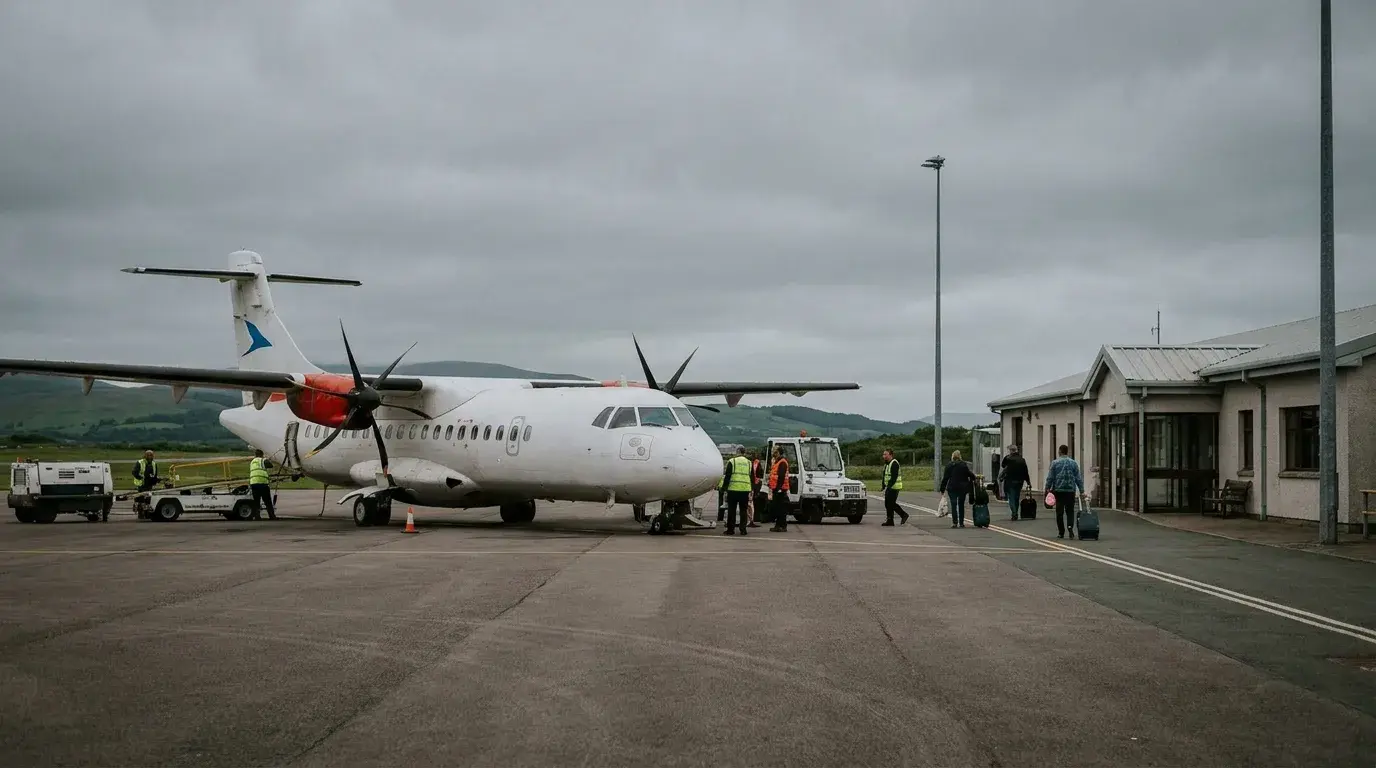
Air Calédonie has been placed under receivership by Nouméa’s commercial court after six weeks of operations blockades in the Loyalty Islands and Île des Pins. The domestic carrier, vital for territorial continuity in New Caledonia, enters a decisive phase with the opening of a receivership aimed at preventing a lasting disruption of its internal air services.
The decision comes as the company could no longer meet its financial obligations. Its board of directors declared a state of insolvency on March 27, with an estimated payable debt of 256 million CFP francs, or approximately €2.1 million. For the Nouméa public prosecutor’s office, the procedure opened on April 14 represents « the last chance » to preserve the future of the airline and the 220 jobs it supports.
Beyond the social implications, the stakes are highly concrete for the island residents. In a territory spread across multiple archipelagos, internal air transport connects populations to the mainland for healthcare, education, administrative procedures, and economic activity. When flights stop, entire journeys become complicated, with immediate effects on daily life.
A blockade that rapidly degraded cash flow
The crisis began on March 2. Since then, customary and user collectives opposing Air Calédonie’s plan to transfer operations from Magenta to La Tontouta have blockaded airports in the Loyalty Islands and Île des Pins. Their argument is clear: departing from the international airport, located about 40 kilometers from Nouméa, would lengthen travel times, increase costs, and make air travel less accessible for part of the population.
For management, the blockade had an immediate impact on revenue. The prosecutor indicated that halting operations in the Loyalty Islands resulted in a daily loss of 10 million CFP francs for the airline. At this rate, the company had no margin to absorb the loss of traffic, especially as its economic model was already weakened before this latest episode.
The court has therefore opened a six-month observation period, renewable. During this phase, debts incurred before April 14 are frozen. The goal is to ease cash flow pressures and allow time to develop a credible recovery plan. In practice, the procedure prevents a sudden halt to operations but imposes a rapid overhaul of the airline’s operations.
A business model already under pressure before the crisis
Air Calédonie’s difficulties are not solely due to the current blockade. The domestic carrier has not recovered its pre-pandemic traffic levels or those seen before the May 2024 riots. According to management, the airline must transport around 300,000 passengers annually to achieve financial balance. In 2025, traffic is estimated to have fallen to between 180,000 and 190,000 passengers, a historically low level.
This contraction weighs heavily on a structure with high fixed costs. Air Calédonie operates an ATR fleet, suited for inter-island routes, but aircraft load factors are critical to covering operating expenses. When demand declines, each flight becomes harder to make profitable, especially in a territory with limited alternative air transport options.
The case also highlights a structural fragility in New Caledonia’s internal air transport system. The Court of Auditors recently noted, in a report, the system’s dependence on public funding and delicate political balances. The receivership buys time but does not, on its own, resolve the issue of sustainable financing for the network.
The transfer to La Tontouta at the heart of the conflict
The plan to transfer operations from Magenta to La Tontouta remains the crux of the conflict. For the airline and authorities, the move is framed as a rationalization measure. Estimates suggest potential annual savings of up to 2 billion CFP francs for the country, including 500 million for Air Calédonie, through cost-sharing with Aircalin and other operators at the international hub.
This economic logic is based on reducing fuel, maintenance, airport assistance, and staffing costs. It also aims to position the airline more effectively for international connections. However, opponents argue that the calculation fails to account for the real constraints faced by island residents, who would face longer overland journeys and higher total travel costs.
The debate extends beyond airport logistics. It raises a public service question in an island territory where access to transport does not carry the same value as in mainland France. For some users, moving Air Calédonie to La Tontouta further distances the airline from those who need it most.
A period of observation to build a survival plan
The receivership procedure now opens a negotiation space between management, public shareholders, and authorities. The court expects a plan capable of restoring balance without undermining the airline’s territorial role. Air Calédonie benefits from temporary protection but must demonstrate it can return to a viable operation once blockades are lifted.
Management states it will mobilize all teams to save a company deemed vital for the territory. It acknowledges, however, that additional efforts will be necessary, particularly if partial unemployment must be extended while operations remain disrupted. The social dossier is therefore closely tied to the flight resumption timeline.
For authorities, the stakes are also political. Provinces, the government, and municipalities are called upon to define their level of support. Without clear arbitration, the airline could remain trapped between the need for deep restructuring and contradictory social expectations. This is precisely the type of situation that receivership is meant to address before it becomes irreversible.
A carrier at the heart of island life
Air Calédonie is not just another airline. Its mission is to maintain the link between Nouméa, the mainland, and the islands. In an archipelago where distances are measured in access to services, the airline plays an internal transport role akin to that of a vital lifeline. This explains the sensitivity of the case, far beyond mere financial indicators.
The Nouméa court has therefore chosen a safeguarding solution over a brutal outcome. The coming months will reveal whether it is possible to reopen airports, stabilize operations, and build a model compatible with the territory’s economic realities. For Air Calédonie, the equation is simple to state and difficult to solve: regain traffic, contain costs, and retain its place in the country’s organization.
Be the first to comment on this article