
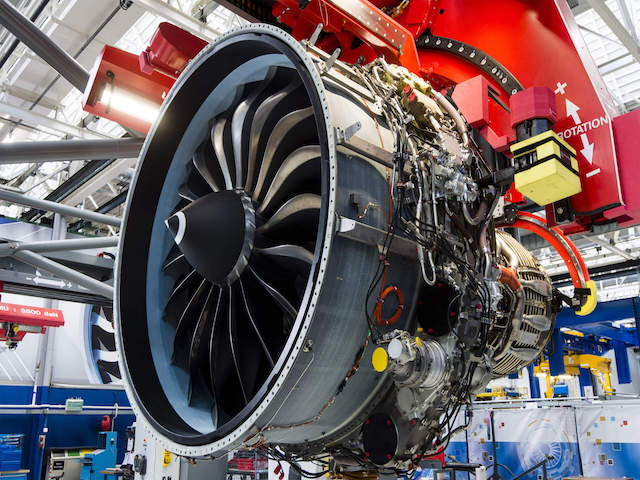
American Airlines confirms its engine strategy for its medium-haul fleet by renewing its partnership with CFM International for future engines. Airbus A321neo and A321XLR. This choice, which extends to 2032, consolidates engine standardization on the LEAP-1A, promising significant economic and environmental performance gains.
LEAP-1A, a strategic choice for American Airlines
The airline American Airlines announced on February 19, 2026 its renewed commitment to the engine LEAP-1A from CFM International. This decision applies to all future Airbus A321neo deliveries, and reflects the company's commitment to rationalization and performance. The LEAP-1A, a 50/50 joint venture between GE Aerospace and Safran Aircraft Engines, was competing with Pratt & Whitney's PW1100G-JM, from the Geared Turbofan (GTF) range.
This confirmation applies in particular to the A321neo aircraft ordered two years ago as part of a major expansion of the single-aisle fleet. CFM International will also provide long-term maintenance for these engines via an extended support contract. Robert Isom, CEO of American Airlines, emphasized the company's pride in operating the world's largest fleet of medium- and long-haul aircraft powered by CFM/GE Aerospace engines, and the history of nearly a century of collaboration with GE Aerospace. «We are delighted that LEAP engines will power the next phase of A321neo deliveries, maximizing the return on our fleet investments to offer the best network to our customers with the most efficient engine on the market,» he added.
A growing A321neo and A321XLR fleet
American Airlines emphasizes the youthfulness of its fleet, the most recent among the American majors. The company currently operates 84 A321neo and 5 A321XLR aircraft. By 2032, this fleet will be expanded by a further 120 A321neo and 35 A321XLR aircraft, all powered by LEAP-1A engines. The company also holds options for a further 116 A320 Family aircraft, which would also be powered by the same engine if exercised.
The introduction of theA321XLR marks a strategic milestone for the low-density long-haul network, particularly on lower-demand transcontinental and transatlantic routes. American Airlines is the only U.S. airline to operate this aircraft, offering on-board Flagship Suites, a Premium Economy cabin, and a new economy-class layout with high-speed Wi-Fi connectivity and individual screens with Bluetooth connectivity.
Engine standardization and fleet strategy
This decision is part of a long-standing relationship with CFM, which began in 2011 with the choice of the LEAP-1B for 100 Boeing 737 MAX. American Airlines currently operates 93 LEAP-1B-powered 737 MAXs, with a further 125 on order. The confirmation of LEAP-1A for the A321 family reinforces this standardization on the European manufacturer's single-aisle aircraft.
For CFM, this agreement confirms LEAP's position as the benchmark engine for American Airlines« single-aisle jets, in the face of Pratt & Whitney's rival offer for the A320neo. H. Lawrence Culp, Jr, President and CEO of GE Aerospace, said he was »proud to be under the wings of American's modernized fleet, and appreciative of the company's renewed confidence«, reaffirming the engine-maker's commitment to supplying »best-in-class" LEAP engines.
CFM's LEAP engines have seen the fastest ramp-up in the history of commercial aviation, with several thousand aircraft already in service.
LEAP-1A, a pillar of performance and decarbonization
The engines LEAP from CFM feature advanced technologies such as composite fan blades and ceramic matrix materials. They offer a reduction of around 15% in fuel consumption and CO2 emissions compared with the previous generation CFM56, as well as a significant reduction in noise. Durability improvements recently certified by the FAA and EASA further enhance the durability of LEAP-1A high-pressure turbine modules.
These performance gains are essential for American Airlines in its drive to reduce its carbon footprint, a major challenge for the airline industry. LEAP engines, coupled with engine health monitoring systems and an open MRO ecosystem, offer mature reliability and high availability for single-aisle aircraft. This is a key advantage in the face of production line tensions and durability problems encountered by other new-generation engines, such as Pratt & Whitney's GTF.

 English
  French