London Heathrow Airport: Why the Third Runway Project Collapses Under Political and Ecological Opposition
The UK government has suffered a major setback in its flagship expansion project for London Heathrow Airport. Parliament’s Transport Committee has issued a scathing report, concluding that the third runway proposal fails to meet essential criteria—noise, air pollution, climate impact, and accessibility. With overwhelming opposition, the government is now backed into a corner and must start from scratch or risk seeing the project permanently shelved.
Led by Labour MP Ruth Cadbury, MPs delivered an uncompromising verdict: the National Policy Statement for Heathrow expansion (HENPS) is deemed inadequate across all fronts. The report highlights the government’s failure to provide tangible evidence justifying a third runway, particularly regarding compatibility with the UK’s climate commitments. MPs demand a robust assessment of environmental consequences, while the Climate Change Committee (CCC) has already warned that the project conflicts with the UK’s carbon budgets.
Economically, the project is also weakened. The final cost remains a major unknown, potentially leading to higher airline fees and, ultimately, increased ticket prices. The committee also highlights the lack of detailed plans for rail access, particularly from West and South London, where estimated costs reach £9 billion without secured funding. The project could generate an additional 60,000 daily road trips, worsening congestion and pollution in the region.
Heathrow Airport continues to defend its proposal. CEO Thomas Woldbye insists the expansion is vital for maintaining the UK’s competitiveness. He cites over 100,000 jobs, £150 billion in additional trade, and a privately funded noise insulation program. Yet, the airport’s arguments struggle to gain traction amid political and public opposition. The Mayor of London and Transport for London (TfL) have already quantified potential land access costs and environmental impacts, warning that achieving 720,000 annual movements would severely degrade air quality and noise levels.
The third runway project, first launched in 2007, has faced numerous twists. Approved by Labour in 2009, scrapped in 2010 by the Conservative-Liberal Democrat coalition, and revived under Theresa May, it was ruled illegal in 2020 for failing to account for climate commitments. The Supreme Court later overturned this ruling, but the project remains deeply controversial. Today, the government must make a decision, but the parliamentary report leaves little doubt: without a complete overhaul, the third runway will never materialize.
A Project Incompatible with Climate Goals and Carbon Budgets
MPs have particularly targeted the climate aspect. According to their analysis, Heathrow’s expansion would be incompatible with UK carbon budgets and net-zero targets. The report calls for a rigorous assessment of consequences if decarbonization targets are not met, including impacts on air quality and noise. MPs also flagged the lack of clarity on the project’s final cost, which could lead to higher airline fees and, ultimately, higher ticket prices.
The UK government, which has long backed the project, now finds itself in a precarious position. The Prime Minister had indicated he would await the parliamentary report before making a decision, but the conclusions are unequivocal. The third runway project is now grounded, and the government must either fundamentally revise it or abandon it entirely. A decision that could have far-reaching implications for the UK’s air connectivity and economic competitiveness.
Major Economic and Social Consequences
If the third runway project is scrapped, the UK could lose part of its air connectivity, impacting international trade. Heathrow, currently the UK’s busiest airport with over 80 million passengers annually and two runways (capped at 480,000 annual movements), would face capacity constraints. A third runway would raise this cap to 720,000 movements, or nearly 2,000 flights per day on average. This 50% traffic increase poses significant logistical and environmental challenges.
The UK government must now explore alternatives to maintain Heathrow’s competitiveness. Options include upgrading existing infrastructure or expanding rail access. However, none appear as ambitious as the third runway, and time is running out: the project, originally slated for 2035, could be delayed to 2039 due to planning and regulatory constraints.
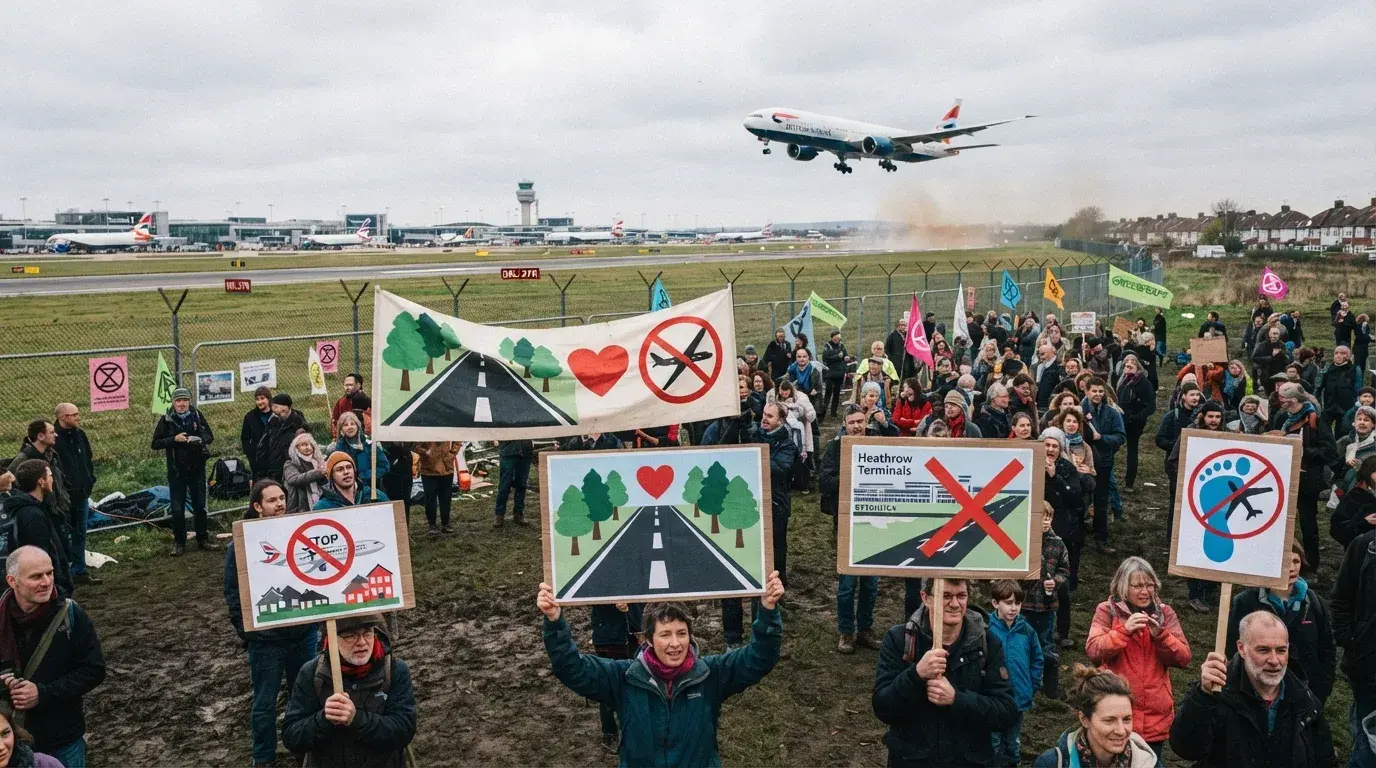
In response, MPs and environmental groups are celebrating. Ruth Cadbury, Chair of the Transport Committee, stated: « The third runway project must be shelved for now, and the government should start from scratch ». A stance shared by London Mayor Sadiq Khan, who strongly opposes the project. A coalition of London boroughs and neighboring counties has joined the opposition, arguing that the project would ultimately impoverish the country once its negative costs are accounted for.
A Two-Decade-Old Political Saga That May Finally Close
The third runway project, launched in 2007, was approved by Labour in 2009, scrapped in 2010, and revived under Theresa May. In 2020, it was ruled illegal for ignoring climate commitments before the Supreme Court overturned the ruling. Today, the UK government faces a dilemma: either overhaul the project to meet environmental and economic demands or abandon it entirely.
A final decision is expected after a 2029 parliamentary vote, but the committee’s report leaves little room for doubt. The third runway project is now on life support, and its future hinges on the government’s ability to find an alternative solution that sustains Heathrow’s competitiveness without sacrificing the environment. One thing is certain: the debate is far from over, and the coming months will be decisive for the future of British aviation.
Immediate Impact on Airlines and Passengers
If the third runway is abandoned, airlines will need to adapt. Heathrow, currently capped at 480,000 annual movements, may struggle to meet growing demand. Airlines could be forced to reduce frequencies or raise fares to offset additional costs. Passengers may bear the brunt, facing higher ticket prices and fewer connections.
Furthermore, scrapping the project could slow the UK’s economic growth. Heathrow is a critical hub for international trade, and reduced capacity could impact commerce. MPs noted that the Chancellor Rachel Reeves’ 2025 GDP growth target of 0.5% is no longer realistic, with the actual impact likely closer to 0.05%. The third runway was meant to support this growth, but it now appears doomed.
A Victory for Environmental Groups
Environmental groups, which have fought the project for years, are celebrating this political setback. They argue the third runway was incompatible with the UK’s climate goals and would have worsened air pollution in the London area. The Transport Committee validated their concerns, concluding that the project failed to meet any essential criteria.
The UK government, which had long supported the project, must now seek alternatives to maintain Heathrow’s competitiveness. Options include upgrading existing infrastructure or expanding rail access. However, none match the ambition of the third runway, and time is short: the project, originally targeted for 2035, could be delayed to 2039 due to planning and regulatory hurdles.
In response, MPs and environmental groups are celebrating. Ruth Cadbury, Chair of the Transport Committee, stated: « The third runway project must be shelved for now, and the government should start from scratch ». A stance shared by London Mayor Sadiq Khan, who strongly opposes the project. A coalition of London boroughs and neighboring counties has joined the opposition, arguing that the project would ultimately impoverish the country once its negative costs are accounted for.
Be the first to comment on this article