Tunisia: Direct Flights from France Up 4% and Tickets from €120, Destination Booming in 2026
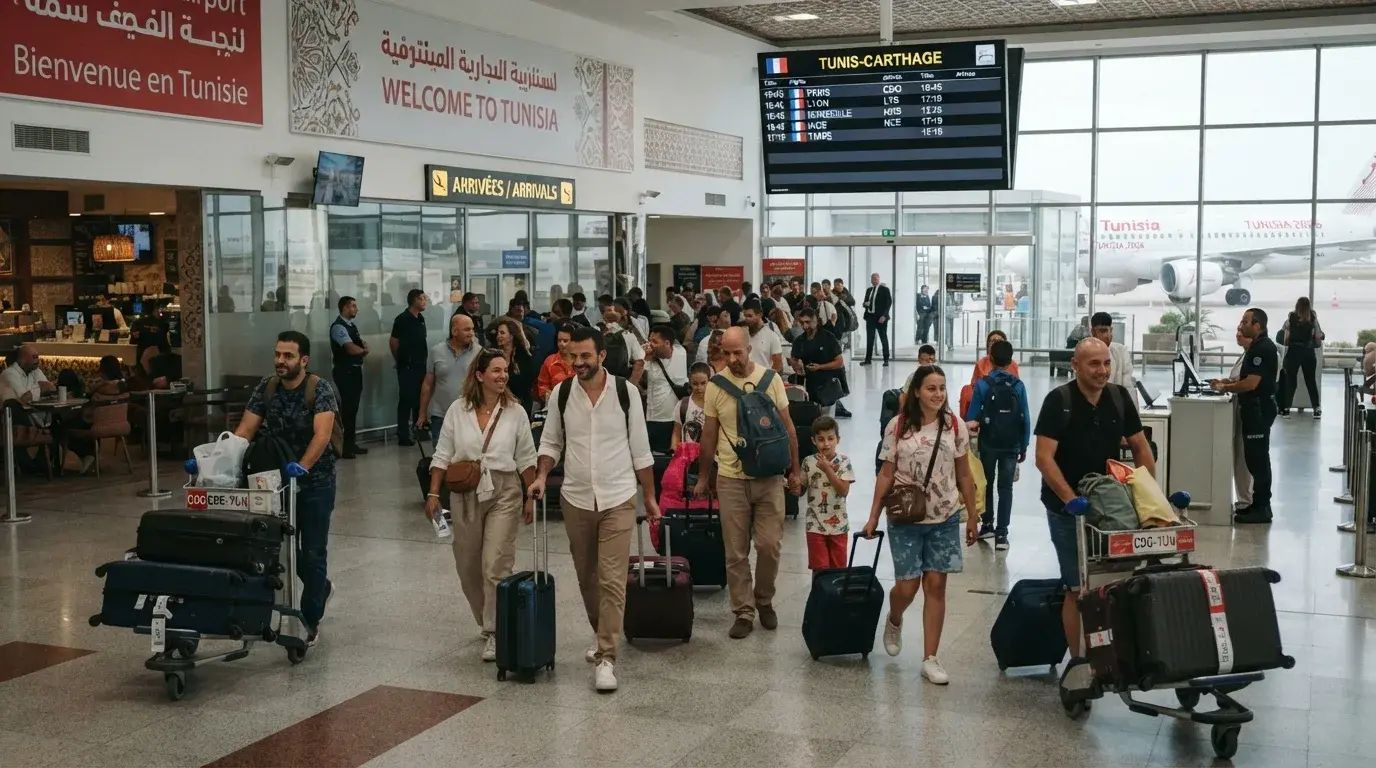
With over 650,000 seats offered between France and Tunisia for summer 2026, the country is breaking aviation records. Transavia, Air France, and other airlines have expanded their routes, now offering direct flights from seven French airports to five Tunisian cities. This represents a 4% increase compared to 2025, confirming the Mediterranean destination’s growing appeal, especially with round-trip tickets starting at €120 from Nice or Lyon. For travelers seeking unbeatable value, Tunisia stands out as one of the best options for getaways or longer stays in 2026.
Direct flights between France and Tunisia are multiplying, with departures from Paris-Orly, Nantes, Lyon, Toulouse, Montpellier, Marseille, and Nice. Transavia serves Tunis, Djerba, Monastir, Sfax, and Tozeur, while other carriers complement the offer. The highlight of this season? The new direct Montpellier–Djerba route, making the Mediterranean gem more accessible from southern France. This network expansion reduces layovers and saves time, a major advantage for families and time-pressed travelers.
Autumn 2026 fares are particularly attractive. According to the Promovols comparator, round-trip tickets to Tunis start at €120 from Nice, €124 from Lyon, €125 from Nantes, €134 from Marseille, and €139 from Toulouse. These Economy-class prices, without extras, position Tunisia among Europe’s most affordable destinations. A boon for budget-conscious travelers, especially in today’s economic climate.
A close and budget-friendly destination
Tunisia boasts a clear geographic advantage: less than two and a half hours from Paris and under two hours from Marseille, making it an ideal short-haul destination for weekends or brief getaways. Direct flights from multiple French cities allow seamless travel, whether for a beach holiday in Djerba or Monastir, an urban escape in Tunis, or a tour of southern Tunisia.
Amid rising prices in Mediterranean destinations like Morocco or Spain, Tunisia offers a competitive alternative. The country is leveraging its value-for-money proposition to attract diverse travelers—families, retirees, and young adventurers alike. High-quality accommodations, easy direct access, and rich local experiences further bolster its appeal.
Tourism rebound confirmed in 2025
Tunisian tourism staged a remarkable recovery in 2025, welcoming over 11 million tourists (+10.3% year-on-year). Tourism revenue reached approximately 8.09 billion Tunisian dinars (around $2.7–2.9 billion), up 6.5% from the previous year. These figures underscore the sector’s rebound after crises linked to the 2015 attacks and the Covid-19 pandemic.
Tunisian authorities view these results as proof of the destination’s resurgence. Tourism Minister Sofiane Tekaya highlights a diversified offer catering to cultural, gastronomic, and adventure travelers, reducing reliance on beach tourism—the sector’s mainstay. This strategy aims to extend the tourism season beyond summer.
Expanding beyond beach tourism
While Hammamet, Sousse, Monastir, and Djerba still dominate accommodation and visitor flows, Tunisia is developing high-value experiences. The country’s ancient heritage—sites like Carthage, Dougga, El Jem, and Bulla Regia—can anchor cultural circuits. The UNESCO-listed medinas of Tunis and Sidi Bou Saïd offer appealing urban escapes for short stays.
Further south, the oases, ksour (fortified villages), and Sahara landscapes invite soft adventure, cultural tourism, and even film-induced travel. Tunisia can also promote its terroir—olive oil, dates, wines, and crafts—for gastronomic and rural experiences. Lesser-known national parks and inland regions represent growth potential for authentic, off-the-beaten-path stays.
Siliana: An untapped potential
The Siliana region in northwest Tunisia exemplifies this untapped potential. Combining landscapes, natural parks, crafts, and archaeological sites, it offers an alternative to saturated coastal areas. Tourism Minister Sofiane Tekaya emphasizes a tailored approach: homestays, small-scale accommodations, guided tours, local product promotion, trained guides, and clear signage. This strategy would spread tourism’s economic benefits inland and extend the season beyond summer.
The slow travel trend, favoring unhurried exploration, could appeal to European travelers seeking authenticity. With relatively short distances, a week-long trip could blend Tunis and Carthage, the Sahel, Kairouan, the south, and Tozeur’s oases.
2027: A pivotal year for Tunisia
Tunis’s designation as Arab Capital of Tourism 2027 brings international visibility. Awarded in December 2025 by the Arab Ministerial Council for Tourism in Baghdad, the title puts Tunisia in the spotlight. Authorities have launched a national preparation program to promote the capital through its heritage, arts, crafts, and architecture.
To ensure lasting impact, Tunisia must deliver concrete improvements: service quality, hotel renovations, mobility, site cleanliness, cultural experiences, and better coordination between air travel, hospitality, and regional offerings. The country now has a favorable alignment: strong French demand, expanding air routes, and competitive pricing. The next step is to translate this quantitative momentum into balanced, sustainable growth.
With more direct flights from France, attractive fares, and a diversifying tourism offer, Tunisia is poised to captivate travelers in 2026 and beyond. Whether for a weekend, a beach stay, or a cultural discovery, the country has all the ingredients—provided it succeeds in transitioning to a more sustainable, less beach-reliant tourism model.
Be the first to comment on this article