Transavia Boosts Paris–Ouarzazate and Paris–Dakhla Routes: Morocco Targets Direct Tourism from France
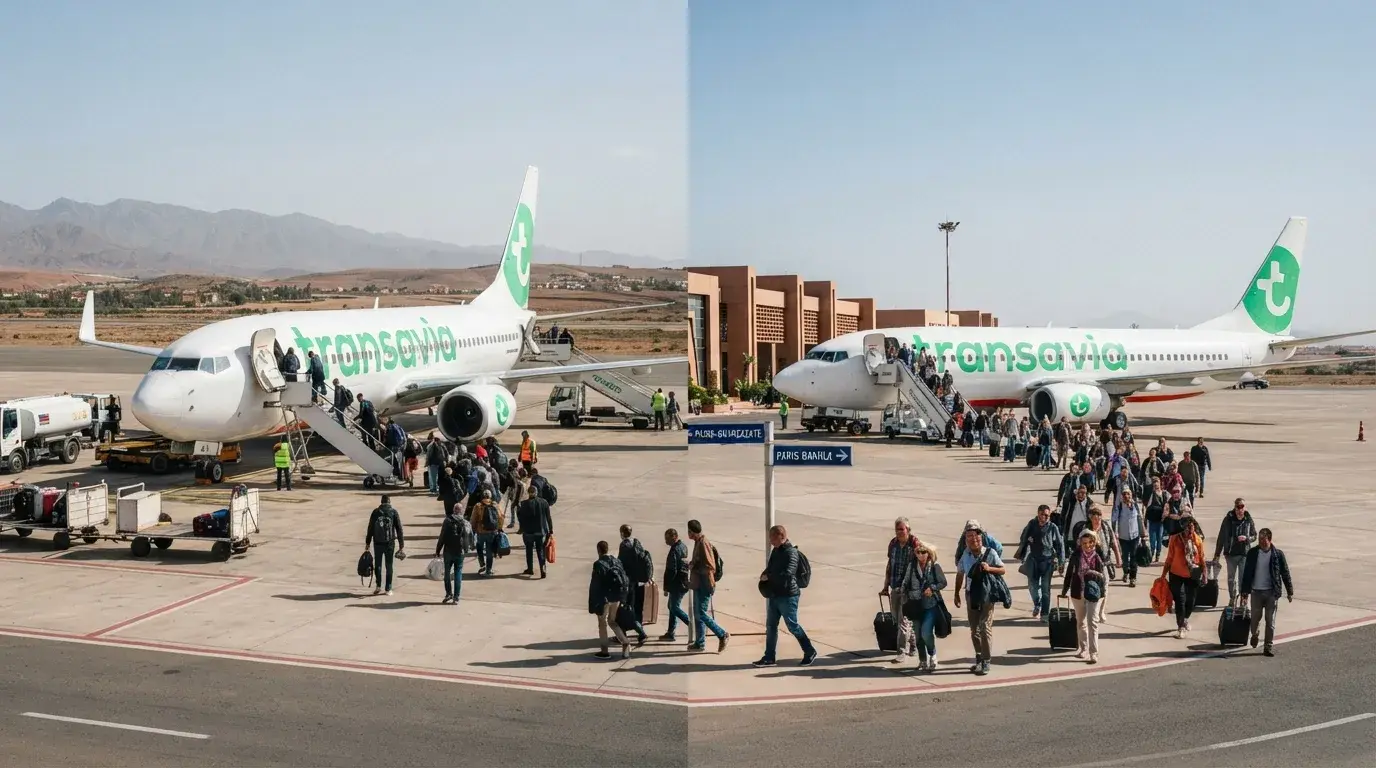
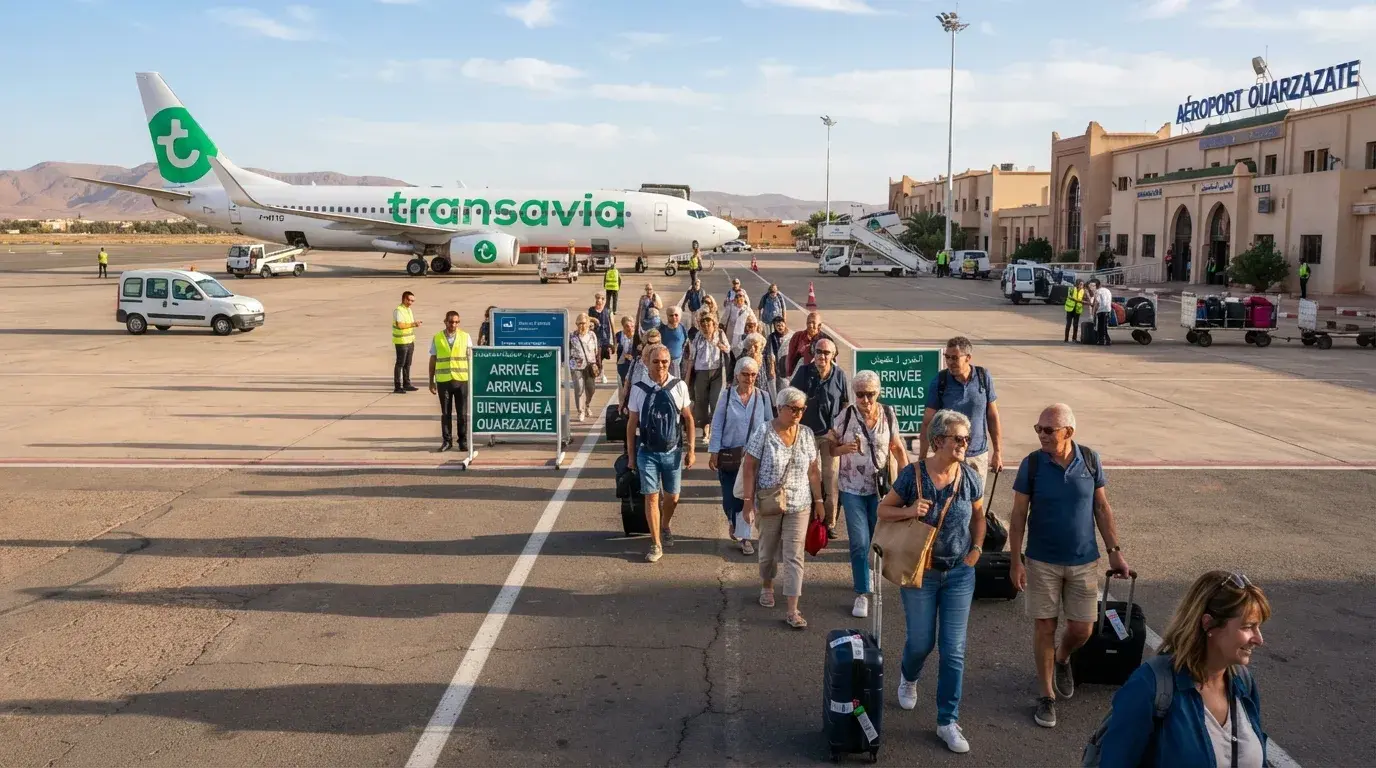
With three weekly flights from Paris-Orly to Ouarzazate and Dakhla, Transavia is solidifying its strategy to capture the French tourism market for Morocco. This expansion aligns with a national plan to make Morocco a leading European destination by 2030.
Effective since the start of the 2026 summer season, this new service marks a turning point in air accessibility to two key regions of the Kingdom. The Moroccan National Tourism Office (ONMT) and Transavia have officially announced the increase in frequencies, rising from two to three direct flights per week on each route. This decision reflects the partners’ confidence in the tourism potential of these destinations and their commitment to maintaining these capacities even during the off-season.
For Ouarzazate, the gateway to southern Morocco and the desert, this initiative complements a series of agreements with low-cost and leisure airlines, particularly in France and Germany. The goal is clear: reposition the city as a standalone destination, not just a stopover on Saharan circuits. The ONMT is banking on European demand for authentic experiences to stimulate the entire local ecosystem, from accommodation providers to receptive agencies and leisure operators.
In Dakhla, already established as a hub for kitesurfing, ecotourism, and luxury travel, the increase in direct flights from Paris supports a strategy of upscaling tourism. Direct flights help secure international visitor numbers and stabilize hotel investments in a region long hindered by its remoteness and limited air connectivity. The ONMT emphasizes that this enhanced service aligns with a strategy of controlled volumes and enhanced travel experiences.
The new schedules—Tuesday, Wednesday, and Saturday for Ouarzazate, and Monday, Wednesday, and Friday for Dakhla—give French travelers greater flexibility in planning their trips. This regularity is a major asset in attracting clients seeking tranquility and predictability, especially during peak tourist seasons when competition among destinations is fierce. Discussions are already underway between the ONMT and Transavia to extend these additional capacities into the winter season, a first for these routes.
This air offensive is part of a broader ambition: Morocco aims to double its tourist arrivals, particularly from France, by 2030. The goal is to position the country as a tourism giant in Africa, leveraging an aggressive strategy to secure air seats on key European outbound markets. Achraf Fayda, Director General of the ONMT, recently highlighted at industry events that this momentum rests on three pillars: air capacity, targeted promotion, and the development of new tourism experiences.
For French travelers, this evolution means improved access to two complementary regions. Ouarzazate, with its kasbahs, valleys, and proximity to the desert, appeals to culture and adventure enthusiasts. Dakhla, with its Atlantic beaches, kitesurfing spots, and eco-lodges, attracts clients seeking relaxation and water sports. Both destinations now benefit from direct connectivity from Paris, without layovers and at competitive fares, thanks to Transavia’s low-cost strategy.
Specialized tour operators in Morocco are already integrating these new routes into their packaged offers. Fram, Étapes Marocaines, Evaneos, Voyage Privé, and Cercle des Voyages are offering circuits and stays that often combine both destinations or integrate them into broader itineraries across the Kingdom. This synergy between air transport and organized tourism enhances the visibility of the new routes and reassures travelers about the quality of experiences on the ground.
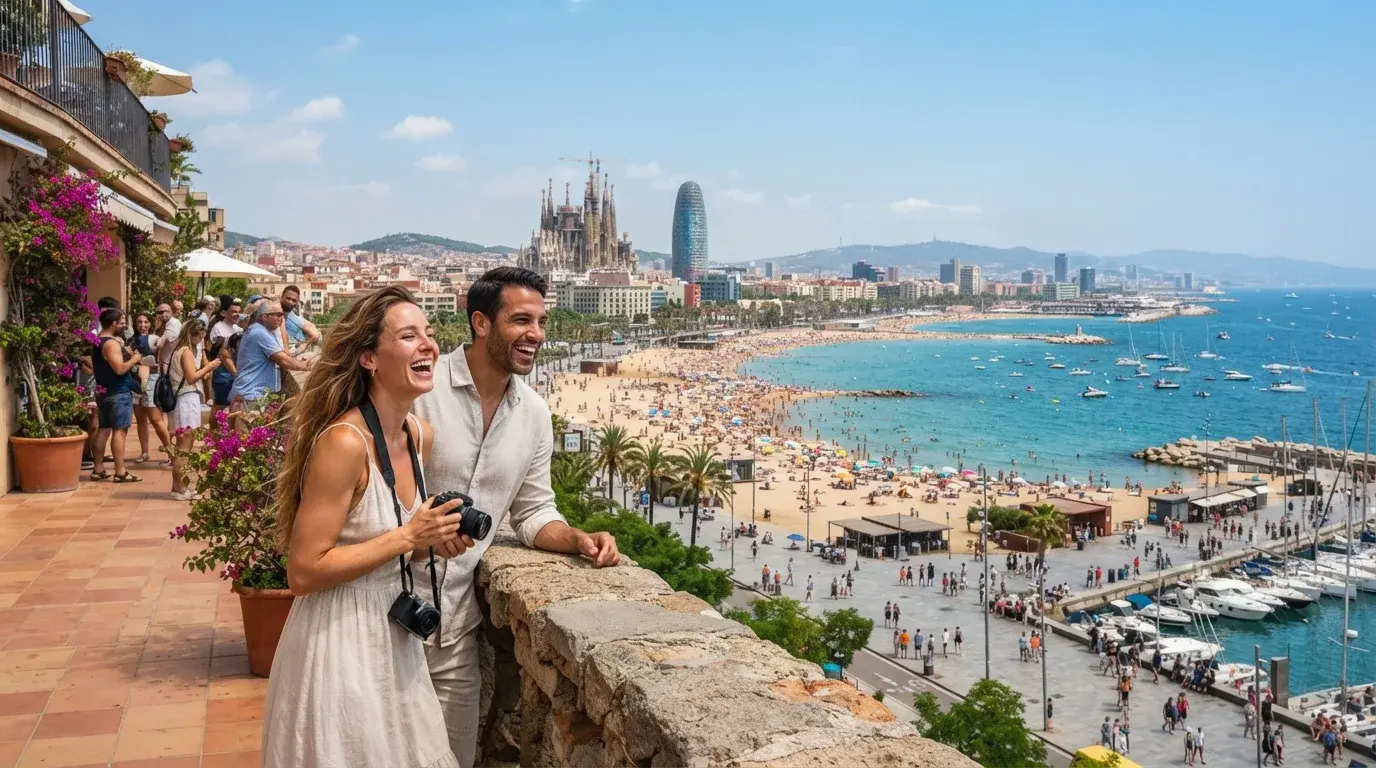
Morocco is thus betting on a winning strategy: boosting its tourism appeal by improving access to under-served destinations while capitalizing on its image as a safe, authentic, and innovative country. With direct flights from Paris, the Kingdom positions itself as a credible alternative to more saturated Mediterranean destinations, while offering a gateway to Africa’s cultural and natural riches.
A bold air strategy for 2030
Recent announcements around Transavia are part of an ambitious national plan validated by Moroccan authorities. The objective is to transform Morocco into a must-visit destination for European travelers, with a specific target: doubling tourist arrivals by 2030. This ambition is built on a three-pronged strategy:
First, increased air capacity on key outbound markets, particularly France, Spain, and Germany. The expansion of routes to Ouarzazate and Dakhla complements the growth of connections to Marrakech, where an easyJet base is set to offer up to 4 million seats annually. This policy helps geographically diversify tourism offerings and reduce pressure on traditional destinations like Agadir or Casablanca.
Second, targeted promotion to reposition Morocco as a standalone destination. The ONMT is ramping up communication campaigns to highlight the riches of southern Morocco, often overshadowed by the country’s northern regions. Partnerships with influencers, collaborations with tour operators, and participation in international trade shows are key levers to attract clients seeking authenticity and unique experiences.
Finally, the development of new tourism experiences to broaden the offer beyond classic circuits. In Ouarzazate, initiatives focus on cultural activities, Atlas Mountain hikes, and stays in kasbahs. In Dakhla, the emphasis is on ecotourism, kitesurfing, and wellness retreats. These new offerings aim to attract a diverse clientele, from families to solo travelers and groups of friends.
Ouarzazate: A laboratory for Morocco’s air strategy
Ouarzazate is not a new destination for Moroccan tourism, but its positioning is evolving rapidly. Long seen as a stopover on the way to the desert, the city is now being promoted as a standalone destination with its own strengths: a cinematic heritage, nearby desert landscapes, and a booming accommodation sector. The increase in Transavia’s flight frequencies aligns with this ambition to make Ouarzazate an essential stopover for adventure-seeking travelers in Morocco.
The ONMT is banking on European demand for authentic experiences to stimulate the entire local ecosystem. Partnerships with low-cost carriers like Transavia make the destination more financially accessible, while collaborations with local receptive agencies ensure a high-quality experience on the ground. Tour operators such as Étapes Marocaines and Evaneos already offer tailor-made circuits that include Ouarzazate in broader itineraries, combining culture, adventure, and relaxation.
This strategy is part of a de-seasonalization effort. By strengthening summer routes, the ONMT and Transavia aim to attract European clients seeking warmth and sunshine, while laying the groundwork for more regular winter visitation. Ongoing discussions to extend the three weekly flights into the off-season are a strong signal of both parties’ commitment to sustaining this momentum.
Dakhla: A destination in full transformation
Dakhla, with its 3,600 hours of sunshine per year and 45 kilometers of lagoons, is emerging as a flagship destination for adventure tourism and discreet luxury. The region is adopting a strategy of controlled volumes to avoid over-tourism and preserve its natural environment. Direct flights from Paris, operating three times a week, are a key lever to attract international visitors and stabilize hotel investments.
Dakhla’s strengths are manifold: ideal conditions for kitesurfing, unique desert and ocean landscapes, and a rapidly expanding accommodation sector ranging from eco-lodges to high-end resorts. Tour operators like Voyage Privé and Cercle des Voyages offer stays combining kitesurfing, yoga, and relaxation for clients seeking wellness and unique experiences. The ONMT emphasizes that this enhanced connectivity helps consolidate a tourism model based on quality rather than quantity.
For French travelers, Dakhla represents an opportunity to discover a region still largely untouched by mass tourism. Direct flights from Paris eliminate the hassle of layovers and save valuable time, especially for short stays or family trips. The regularity of flights—three times a week—offers welcome flexibility for planning trips according to personal preferences.
Tour operators adapt to the new landscape
French and European travel agencies have quickly integrated Transavia’s new routes into their offerings. This rapid adaptation underscores the importance of air accessibility in destination competitiveness. Tour operators now offer circuits and stays that often combine Ouarzazate and Dakhla or integrate them into broader itineraries across Morocco. This synergy between air transport and organized tourism maximizes the visibility of the new routes and reassures travelers about the quality of experiences on the ground.
Fram, for example, is promoting organized circuits through Ouarzazate, such as the “Grand Tour of Morocco” or “Along the Oases and Dunes.” Étapes Marocaines, based in Marrakech, offers treks and hikes in southern Morocco departing from Ouarzazate, with tailor-made desert circuits. Evaneos, a tailor-made travel platform, connects travelers with local agencies to build personalized itineraries. Voyage Privé focuses on private sales and beach stays in Dakhla, while Cercle des Voyages offers stays dedicated to kitesurfing and yoga.
This adaptation by tour operators is a major asset in the success of Morocco’s strategy. By offering turnkey packages, they simplify access to new destinations and reduce uncertainties associated with organizing trips to regions still relatively unknown to European travelers. This approach also helps build loyalty among clients seeking authenticity and customization.
A winning bet for Morocco and travelers
For Morocco, this strategy of strengthening air connectivity from France is a winning bet on multiple fronts. First, it allows for geographical diversification of tourism offerings and reduces pressure on traditional destinations. Second, it positions the Kingdom as a credible alternative to more saturated Mediterranean destinations. Finally, it helps create local jobs and stimulate the regional economy, particularly in accommodation, food service, and leisure sectors.
For French travelers, this evolution means improved access to two complementary regions. Ouarzazate and Dakhla offer unique experiences, whether cultural, adventure-based, or relaxing. Direct flights from Paris, operated by Transavia, enable travel without layovers and at competitive fares, thanks to the airline’s low-cost strategy. This financial accessibility is a major asset in attracting a diverse clientele, from families to solo travelers and groups of friends.
With this air offensive, Morocco reaffirms its ambition to become a leading destination for European travelers. By focusing on authenticity, quality experiences, and accessibility, the Kingdom positions itself as a compelling alternative to more crowded Mediterranean destinations. French travelers now have an additional reason to choose Morocco for their next getaways, with direct flights to two of the country’s most iconic destinations.
Be the first to comment on this article