KLM Crisis: Over 100 Flights Canceled in a Week, Stranded Passengers
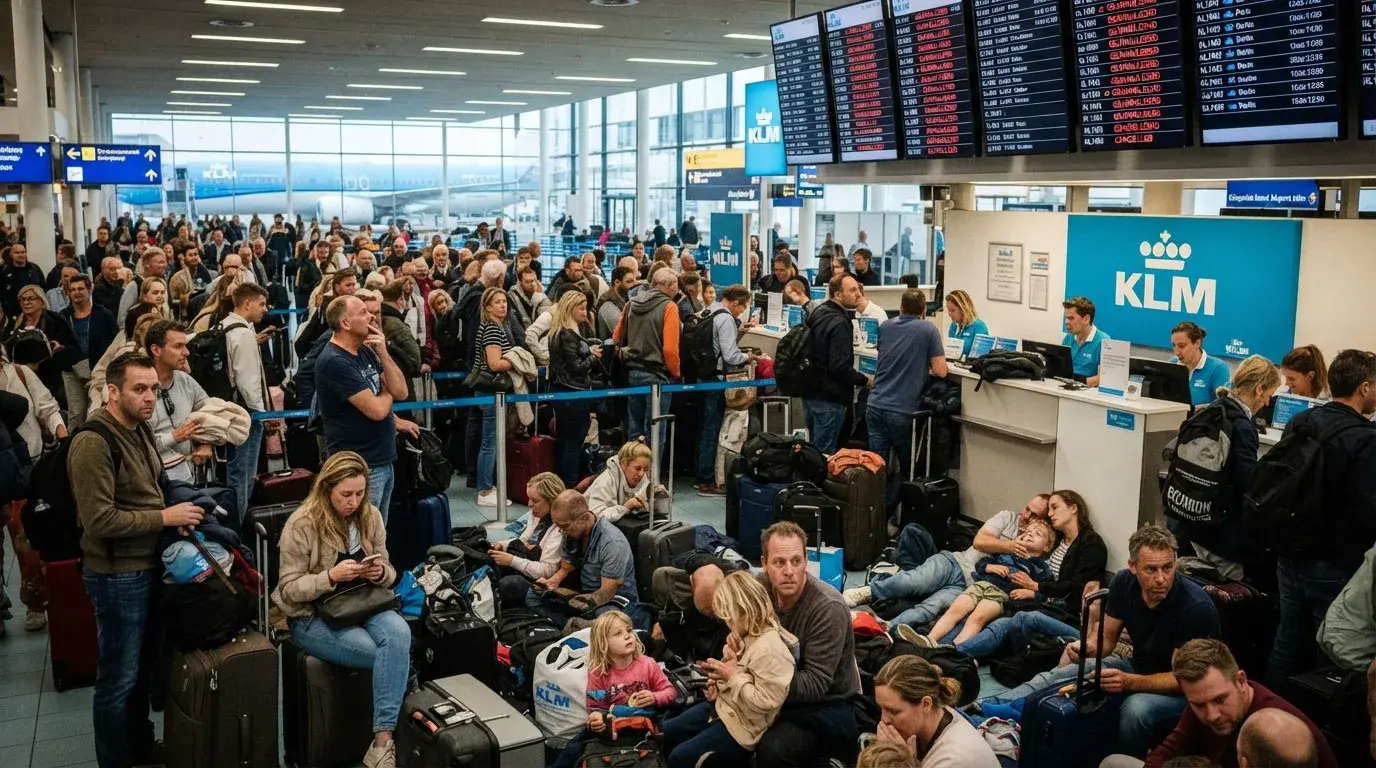
Dutch carrier KLM is navigating one of its most turbulent periods in recent memory. In just seven days, the airline canceled over 100 flights, disrupting both European and intercontinental routes. A dedicated crisis team has been activated to stabilize an escalating situation, leaving passengers stranded amid an unprecedented wave of disruptions.
According to data compiled by De Telegraaf and aviation news site Up in the Sky, a total of 103 flights were scrapped in a single week. The cancellations span KLM Cityhopper’s regional operations and the long-haul network. The airline blames a mix of unforeseen maintenance, repairs following damage, and prolonged technical interventions. Compounding the issue, delays in receiving critical spare parts have further delayed aircraft returns to service. In a desperate bid to salvage its schedule, KLM has resorted to leasing aircraft—a costly workaround that only deepens the financial strain on the carrier.
The fallout for passengers has been immediate. Crew rotations have been thrown into disarray, schedules are being hastily reassigned, and flight attendants’ rest days are frequently disrupted. The scheduling system itself has compounded the chaos: a technical glitch temporarily blocked employees from accessing updated rosters or submitting leave requests. In response, the VNC union, representing cabin crew, demanded an emergency meeting with KLM management. « We are disappointed with the outcome », the union stated, noting that while KLM acknowledges the challenges, no concrete solutions have been offered. The union is now pushing for financial compensation for affected staff, adding another layer of cost to an already dire crisis.
Despite management’s insistence that a combination of factors is to blame for the cancellations, passengers remain unconvinced. « There are currently more temporarily grounded aircraft than usual », a KLM spokesperson admitted to NU.nl. To prevent further chaos, the airline has proactively slashed its winter schedule, with cuts set to continue until early March. The goal is to build a larger reserve fleet and improve reliability—but for travelers, this move only underscores the severity of the crisis. How can passengers trust KLM to stabilize operations when the winter season is already off to a disastrous start?
A Fleet Under Strain, Passengers in Uproar
KLM’s struggles are not isolated. They reflect broader tensions across Europe’s airline fleets, where carriers are struggling to maintain operational reliability. Delays in spare parts deliveries, maintenance bottlenecks, and logistical hurdles are crippling carriers’ ability to honor commitments. Yet KLM appears to be bearing the brunt, with last-minute cancellations becoming routine.
For passengers, the consequences are severe: canceled bookings, missed connections, and out-of-pocket expenses for rebooking flights or hotels. Some travelers are stranded in airports with no viable alternatives, while others face hefty bills for last-minute train tickets or overnight stays. While airlines, including KLM, typically offer compensation for delays or cancellations, the payouts often fall short of covering the full extent of the damage. With schedules pared down to the bone, travel options are dwindling fast.
Industry experts warn that this crisis exposes deeper structural flaws. After years of pandemic-era restrictions, airlines accelerated aircraft orders to meet surging demand. Yet supply chains, still reeling from the pandemic’s aftershocks, are struggling to keep pace. Delays in engine production, landing gear, and avionics are directly impacting carriers’ operations. In this context, KLM is far from alone: other European carriers like Lufthansa and Air France have also faced waves of cancellations in recent months.
What’s Next for KLM?
The burning question now is whether KLM can weather this storm before the situation spirals further out of control. Management has pledged additional efforts to stabilize the fleet and minimize last-minute cancellations. Yet passengers and staff alike have lost faith in promises. Mounting delays, reduced schedules, and a lack of concrete solutions to improve crew working conditions have only fueled distrust.
For travelers, the priority is now damage control. Airlines urge passengers to check their flight status regularly, but this advice feels hollow amid the scale of the cancellations. Some are turning to travel insurance for protection, while others are opting for rail alternatives on European routes. For long-haul travelers, however, options are limited—often leaving them with little choice but to wait and hope that KLM can right the ship.
For now, KLM remains under intense scrutiny. Passengers, staff, and industry observers are waiting for action, not words. The survival of the Dutch carrier as a major European aviation player may hinge on its ability to turn the tide in the coming weeks.
How to Protect Yourself from Flight Cancellations
With KLM’s schedule in flux and other carriers facing similar challenges, travelers must take proactive steps to mitigate risks. Here’s how to stay ahead of the chaos:
Monitor your flight status religiously. Airlines send notifications via email or SMS, but these can easily get lost in the noise. Checking directly on the airline’s website or app is far more reliable. Consider signing up for real-time alerts from third-party platforms to stay informed.
Opt for flexible bookings whenever possible. Some carriers, including KLM, offer changeable fares—for a premium. While this may seem costly upfront, it can save significant stress (and money) if disruptions strike. For European travel, trains are a surprisingly robust alternative: high-speed rail links between major hubs like Amsterdam, Paris, and Frankfurt are fast, comfortable, and far less prone to last-minute cancellations.
Invest in travel insurance. Comprehensive policies can cover rebooking fees, hotel stays, and alternative transport costs in the event of cancellations. Review policy details carefully, including coverage limits and exclusions. Some plans even offer protections for disruptions caused by strikes or severe weather—two common triggers for flight cancellations.
For those who must travel despite the chaos, anticipation is key. Book flights early, avoid complex connections, and allow extra time to reach the airport. Be prepared to pay a premium for replacement flights, especially if your ticket isn’t changeable. Flexibility and vigilance will be your best allies until the skies clear.
KLM’s crisis is a stark reminder of the fragility of the aviation sector. It highlights just how vulnerable travelers are to disruptions—and how critical it is to plan ahead. Until conditions improve, caution and adaptability will be passengers’ greatest assets.
Key Takeaways
- Over 100 flights canceled in a week for KLM, impacting both European and long-haul routes.
- A crisis team has been deployed, but solutions remain elusive.
- Passengers and crew bear the brunt of last-minute rebookings and cancellations.
- Practical tips to minimize risks: track flights, choose flexible bookings, secure travel insurance, and plan ahead.
Be the first to comment on this article