Air France Revolutionizes Long-Haul Menus: Six Michelin-Starred Chefs Reinvent French Gastronomy at 35,000 Feet
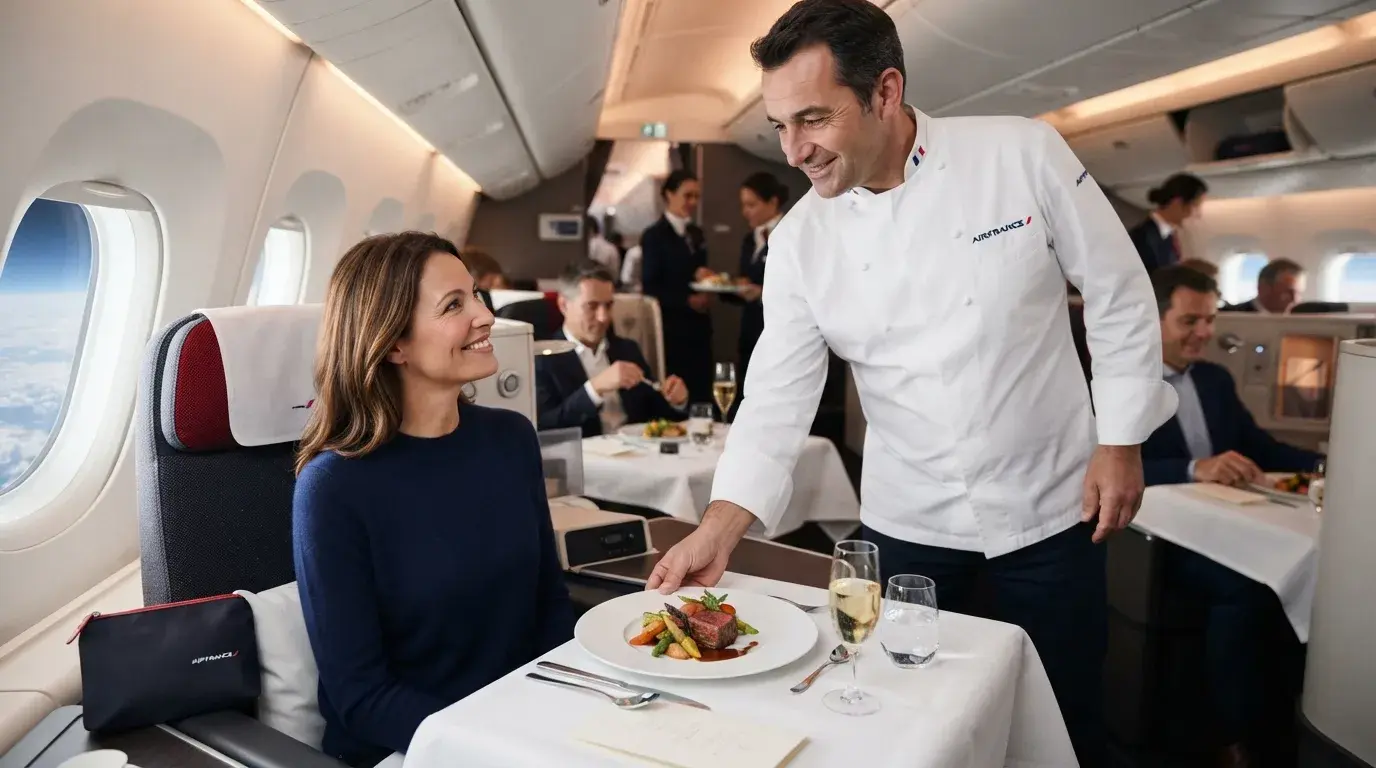
At 35,000 feet, every meal aboard Air France’s long-haul flights becomes a pivotal moment in the travel experience. Since October 1st, the airline has entrusted the design of its premium menus to six celebrated French chefs and pastry chefs, marking a significant step in its upscale positioning strategy. Arnaud Lallement, Claire Heitzler, Mathieu Viannay, François Adamski, Nina Métayer, and Frédéric Simonin have been selected to craft menus for the La Première, Business, and Premium cabins, turning the skies into a showcase of French gastronomy.
This bold move aligns with Air France’s ambition to strengthen its high-end positioning, with in-flight dining remaining a key differentiator among airlines. The six Michelin-starred chefs worked closely with the Servair Culinary Studio, the airline’s long-standing partner, to adapt their creations to the unique constraints of air travel: pre-preparation, transport, in-flight reheating, and texture preservation in a pressurized environment. The goal? To deliver a unique sensory experience where each bite evokes the flavors of France’s regions.
Among the most notable innovations are Claire Heitzler’s desserts, named Best Pastry Chef of the Year by Gault & Millau in 2013. Her creations, such as Racine (black Caribbean chocolate mousse with Madagascar vanilla cream) and Planifolia (Bourbon vanilla), balance indulgence and lightness while evoking distant travels while celebrating terroir products. In Business Class, Mathieu Viannay, double Michelin-starred chef of La Mère Brazier, offers dishes like a frégola creamy risotto with aged Comté and roasted butternut squash, paired with candied lemon. Each recipe is designed to highlight fresh, local, and seasonal ingredients, with a strong preference for French-sourced meats, poultry, dairy, and eggs.
A Differentiated Menu by Cabin Class
Air France’s gastronomic offering varies by travel class, reflecting a clear ambition: to transform every long-haul flight into a culinary escapade. In the La Première cabin, Arnaud Lallement, triple Michelin-starred chef of L’Assiette Champenoise, crafts the entrées and hot dishes for the first and second services. His recipes, such as lobster poached in court-bouillon or a stew of Swiss chard with chickpeas and yellow wine sauce, blend elegance and simplicity while respecting the technical constraints of in-flight service.
In Business Class, François Adamski, Servair’s Corporate Chef and Meilleur Ouvrier de France, has designed breakfasts and brunches. His morning creations, like Chimay-stuffed eggs or a buckwheat galette with mushrooms and spinach, embrace modernity while staying true to French gastronomic traditions. The desserts, meanwhile, are the work of Nina Métayer, crowned the World’s Best Pastry Chef in 2023 by The World’s 50 Best Restaurants. Her offerings, such as Instant Alliance (pear-chocolate) or Parenthèse (mandarin-almond), are crafted to provide a light, indulgent moment even at high altitude.
Finally, in Premium Economy, Frédéric Simonin, Michelin-starred chef of Parisian restaurant Le 52 Faubourg, has designed two regularly refreshed hot dishes, including a vegetarian option. His creations, such as conchiglie with chanterelles or shrimp in tomato sauce with cuttlefish ink risotto, showcase seasonal ingredients prepared with finesse.
A Commitment to Sustainability and Zero Waste
Beyond taste, Air France has placed sustainability at the heart of its new offering. The airline emphasizes the exclusive use of fresh, local, and seasonal products, with a strong preference for short supply chains. Fish are sourced from French fisheries or sustainable fisheries, while meats and poultry come from local farms. Another key focus: combating food waste. In Business Class, passengers can pre-select their hot meal up to 24 hours before departure, allowing Air France to more precisely adjust meal loads onboard and reduce surplus.
This approach is part of a broader strategy to elevate the art of French travel, extending to lounges, the La Première cabin, and ground services. Air France is betting on a holistic experience where every detail matters, from menus to service, including airport hospitality.
Positioning Against Fierce Competition
In an increasingly competitive long-haul market, where Gulf carriers, Asian airlines, and European rivals engage in fierce competition, gastronomy has become a powerful differentiator. Air France is not alone in betting on Michelin-starred chefs: Singapore Airlines has also revamped its culinary offering with its SIA Chefs’ Selection program, while other carriers like Emirates and Qatar Airways partner with international chefs to stand out.
However, Air France distinguishes itself with its resolutely French identity and commitment to sustainability. The airline has already deployed its new La Première suite on part of its Boeing 777-300ER fleet, with the first commercial flight on the Paris-New York route scheduled for April 2025. This renovated cabin, paired with an exceptional gastronomic offering, positions Air France as a key player in the premium segment for intercontinental routes.
In-flight dining is not a minor detail in the airline industry: for a traditional carrier, it strongly contributes to product differentiation, especially on long-haul flights and in premium cabins. For low-cost airlines, it also serves as a revenue stream and a way to enhance the passenger experience without compromising the low-cost ticket model. But for Air France, the stakes go far beyond: the goal is to create a memorable experience where every journey becomes a celebration of French culture and excellence.
Technical and Operational Challenges
Adapting Michelin-starred chef recipes to the demanding environment of in-flight cuisine is no small feat. The constraints are numerous: pre-preparation, transport, in-flight reheating, and above all, preserving textures in a pressurized cabin. The chefs had to work closely with Servair’s teams to adjust their creations, accounting for preservation times, reheating conditions, and the need to retain flavors.
For example, lobster poached in court-bouillon must retain its tenderness after several hours in the air, while a chocolate mousse dessert must remain stable at high altitude. These technical challenges explain why few airlines dare entrust their menus to chefs of this caliber. Air France has risen to the challenge, proving that aviation can be a playground for culinary innovation.
This ambition is also reflected in the meticulous presentation of dishes. The plates, designed in collaboration with the chefs, are carefully showcased with touches of elegance reminiscent of Michelin-starred restaurants. It’s Air France’s way of proving that travel and gastronomy are not incompatible—in fact, they complement each other beautifully.
What This Means for Travelers
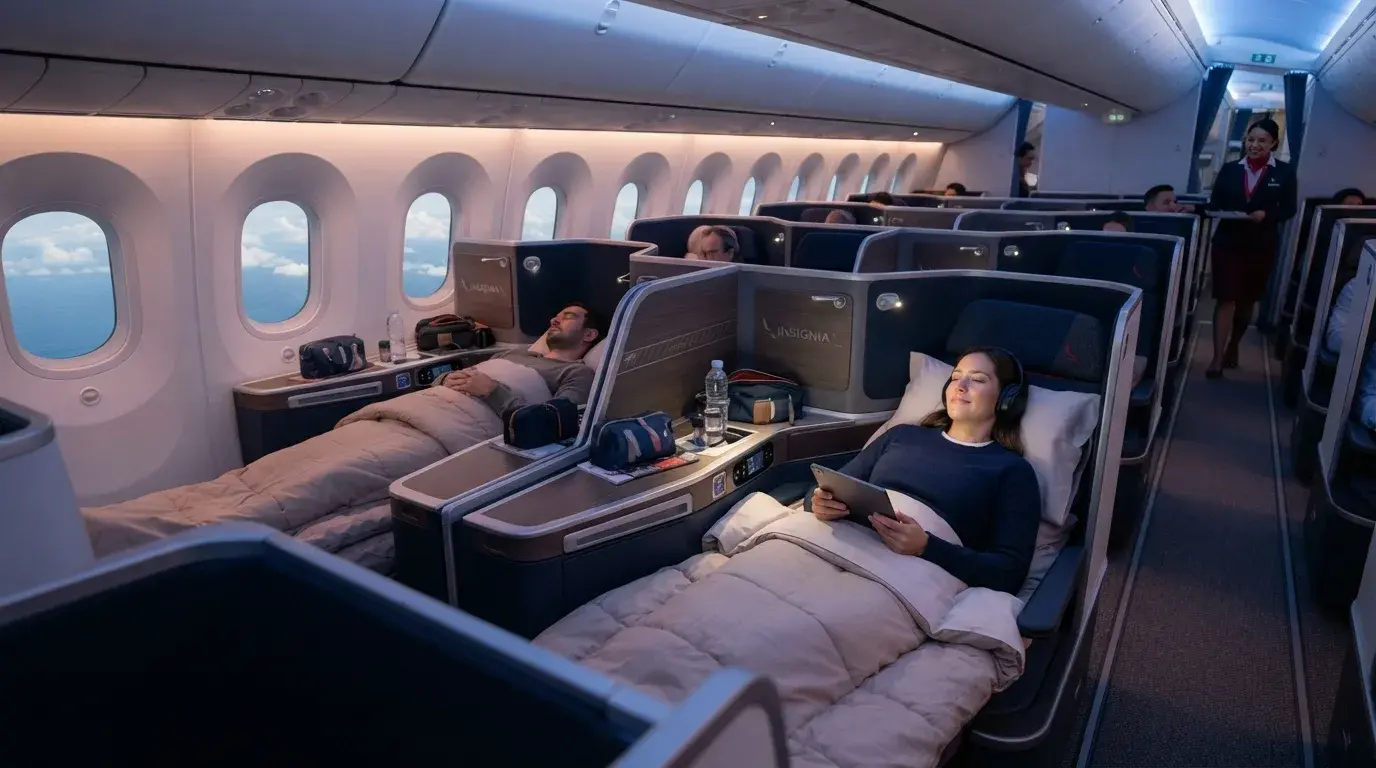
For passengers, this new offering represents a unique opportunity to enjoy an exceptional culinary experience aboard Air France’s long-haul flights. Whether in La Première, Business, or Premium Economy, every meal becomes a refined interlude where time seems to stand still. Business travelers, often accustomed to quick, standardized services, discover a more elegant alternative, while tourists immerse themselves in French gastronomy from the moment they take off.
Ultimately, this initiative aligns with a loyalty-driven strategy. By offering a memorable experience, Air France enhances its appeal to frequent flyers while attracting more discerning travelers seeking excellence. With this new menu, the airline proves it doesn’t just transport passengers—it elevates their journey with style.
Gastronomy is more than a detail in the air travel experience: it’s becoming a compelling reason to choose an airline. And in this arena, Air France has just scored a major win.
Be the first to comment on this article
On the same topic
- Emirates Weighs Swapping Boeing 787s for 777Xs: A Strategic Shift That Could Transform Long-Haul Travel
- Air Canada Launches A321XLR on Lyon Route: The Long-Haul Revolution Transforming Travel
- Düsseldorf-New York in 2027: La Compagnie Expands All-Business Model to Germany
- Israir Launches Flights to New York: How to Book Tickets for the Big Apple from October 2026
- Lufthansa Bets on Airbus A350-1000 Over Boeing 777X: What This Means for Your Long-Haul Flights
- Turkish Airlines Revives Premium Economy in 2028: What Travelers Need to Know