Saudia Takes Delivery of First Airbus A321XLR, Eyes Expansion into Europe and Indian Ocean
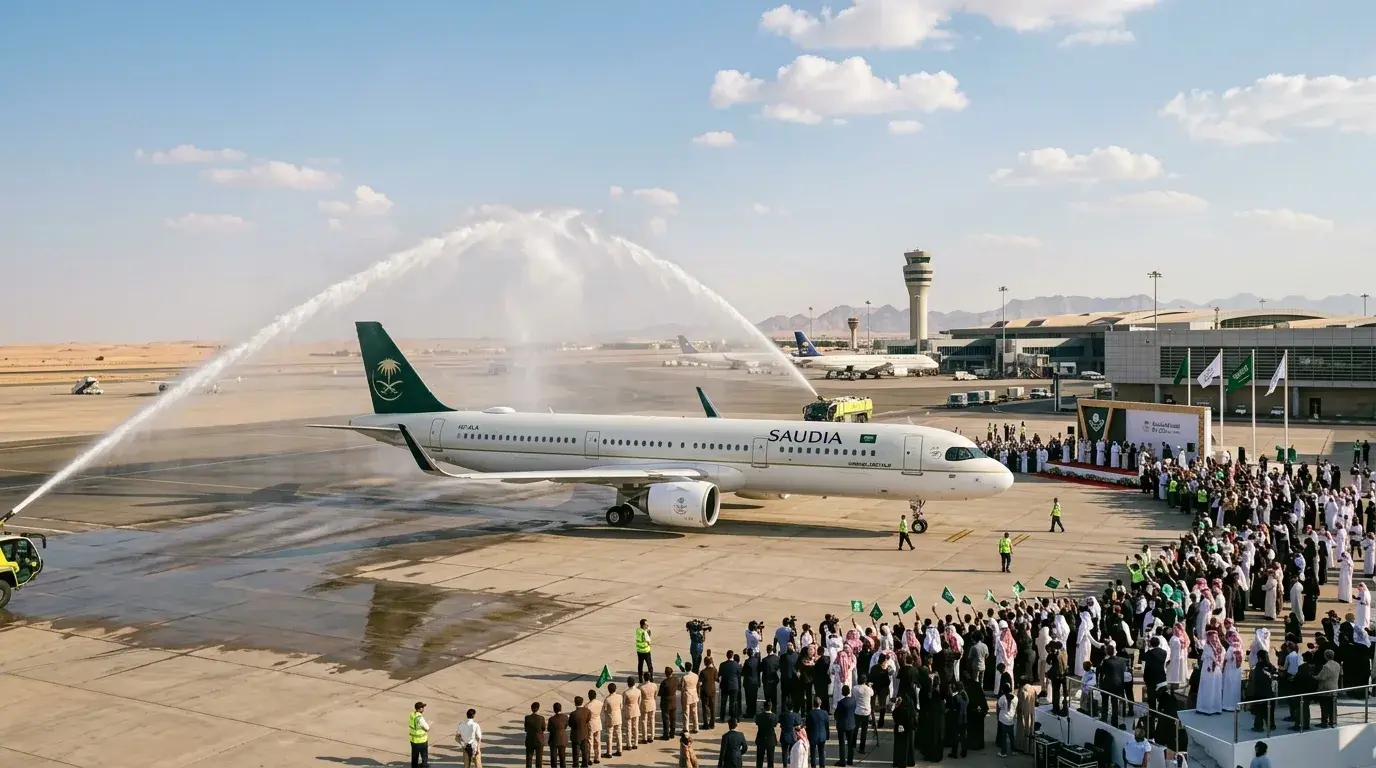
Saudia has taken a concrete step in modernizing its fleet. The Saudi national carrier received its first Airbus A321XLR in Toulouse on May 25, 2026, becoming the first airline in Africa and the Middle East to put this long-range narrowbody into service. The message is clear: Riyadh wants an aircraft that is more flexible to operate than a widebody, while maintaining sufficient capacity for longer, targeted routes.
This delivery is more than just a new aircraft in the fleet. It is part of a broader program involving 15 A321XLRs ordered, aligned with the goals of Saudi Vision 2030. Saudia aims to strengthen its presence in markets where demand does not necessarily require a large widebody cabin but justifies a better-equipped product than a standard narrowbody.
The choice of the A321XLR is not insignificant in today’s aviation landscape. Airlines adopting it seek to open or reinforce routes without tying up a widebody, while controlling fuel consumption and operating costs. Saudia is following this trend with a strategy targeting both tourist and premium traffic, particularly to Europe, Africa, and the Indian Ocean.
A cabin designed for high-value routes
The aircraft delivered to Saudia is configured far less densely than standard A321s in many airlines. It carries just 144 seats, including 24 in Business Class and 120 in Economy. In practice, this provides more space per passenger and a cabin closer to the long-haul experience than a typical narrowbody.
The 24 Business Class seats are fully lie-flat and offer direct aisle access. For passengers traveling on routes of several hours, this configuration changes the aircraft’s use: it is no longer just about getting from point A to point B quickly, but about offering a consistent experience on longer, sometimes intercontinental routes.
Saudia also relies on Airbus’ Airspace cabin, which features larger overhead bins, redesigned ambient lighting, and improved sound insulation. In theory, the product aims to bring the experience closer to that of a widebody while remaining on a narrowbody platform. For the airline, the benefit is clear: offering superior comfort without shifting to the costly logic of a widebody on intermediate markets.
First commercial flight to Vienna before Paris and the Maldives
Saudia’s A321XLR commercial deployment begins quickly. The first scheduled flight connects Jeddah to Vienna, with three weekly frequencies initially, rising to four during the peak summer season. This route serves as a real-world test for an aircraft designed to expand the network without increasing cost structures.
Paris-Charles de Gaulle is next, starting June 15, 2026, followed by Malé in the Maldives on July 1. Again, the logic is clear: destinations with strong tourist or premium demand where the airline can fill the aircraft without necessarily deploying a widebody daily. From October, the program will expand further to include Barcelona, Milan, Brussels, Madrid, Geneva, and Dakar.
This schedule shows that Saudia is not just making an announcement. The airline is organizing a gradual ramp-up, route by route, with well-identified European markets and an outlet to the Indian Ocean. In a highly competitive environment, the ability to match aircraft size to market profile becomes a real operational advantage.
An aircraft to better connect the kingdom to international markets
With a range of 4,700 nautical miles (about 8,700 kilometers), the A321XLR allows Saudia to open routes that sit at the limit of what a narrowbody can cover profitably. This gives the airline useful flexibility for European, North African, or medium-to-long-haul destinations while avoiding oversized capacity.
This positioning also supports the kingdom’s ambition to attract 150 million visitors annually by the end of the decade. Air transport is central to this strategy, and Saudia plays a direct role. By increasing the number of cities accessible with a more flexible fleet, the airline can support the growth of inbound tourism without relying solely on widebodies on the busiest routes.
The choice of the A321XLR also comes amid a broader fleet modernization effort. Saudia aims to consolidate its network across more than 100 destinations on four continents and maintain a competitive offering against Gulf carriers, which also boast strong arguments in terms of connections and onboard comfort.
A long-standing partnership with Airbus
This delivery is part of a long-standing relationship between Saudia and Airbus. The airline received its first A300 in 1984, giving historical depth to the partnership. Forty years later, the A320neo family narrowbodies are taking over as the backbone of part of the fleet expansion.
In May 2024, the Saudia Group signed an agreement with Airbus for 105 A320neo family aircraft, valued at $19 billion. This commitment places the airline on a clear growth trajectory, where orders are not just about replacing old aircraft but supporting network expansion into targeted markets.
For Airbus, this first A321XLR delivery to an African and Middle Eastern carrier also confirms the program’s momentum. The aircraft, certified by the European Union Aviation Safety Agency in July 2024, has already found its place with several European airlines. Saudia’s arrival strengthens this trend and broadens the possible use cases even further.
A narrowbody reshaping long-haul balance
The A321XLR is often seen as an aircraft that blurs traditional boundaries between narrowbody and widebody. Its ability to fly long distances with around 30% lower fuel consumption per seat compared to previous generations makes it an attractive tool for airlines looking to serve more cities without artificially inflating demand.
Saudia gains an additional advantage: flexibility. On some routes, a widebody may be too ambitious in capacity, while a long-range narrowbody allows the airline to tailor capacity to market realities. In an industry where margins are sensitive to load factors and fuel prices, this flexibility carries significant weight in fleet decisions.
Environmental considerations also come into play. Airbus states that its aircraft are now compatible with 50% sustainable aviation fuel, with a goal of full compatibility by 2030. For airlines like Saudia, which are modernizing their image while meeting operational imperatives, such developments strengthen the program’s appeal.
The schedule of first routes already shows the commercial logic at work: prioritizing routes with high visibility, where cabin product matters as much as network accessibility. Vienna, Paris, Malé, and then major European cities and Dakar outline a coherent set for a fleet that must now enter its real operational phase.
Saudia now has an aircraft capable of flying farther with a more contained cost structure. The real test will begin with the first regular rotations and how the airline fills this new long-range narrowbody over time.
Be the first to comment on this article
On the same topiclong-courrier
- French Bee Pilots File Strike Notice from May 13-18, 2026
- Vacation Destinations: France Supports Market as Long-Haul Recedes Amid Geopolitical Tensions
- Corsair Opens Business Lounge in Réunion, Strengthens Long-Haul Strategy
- Prague: Václav-Havel Airport exceeds 17 million passengers by 2025
- Emirates adopts Starlink on its long-haul fleet: in-flight connectivity redefined