Morocco, Africa's top destination: nearly 20 million tourists by 2025
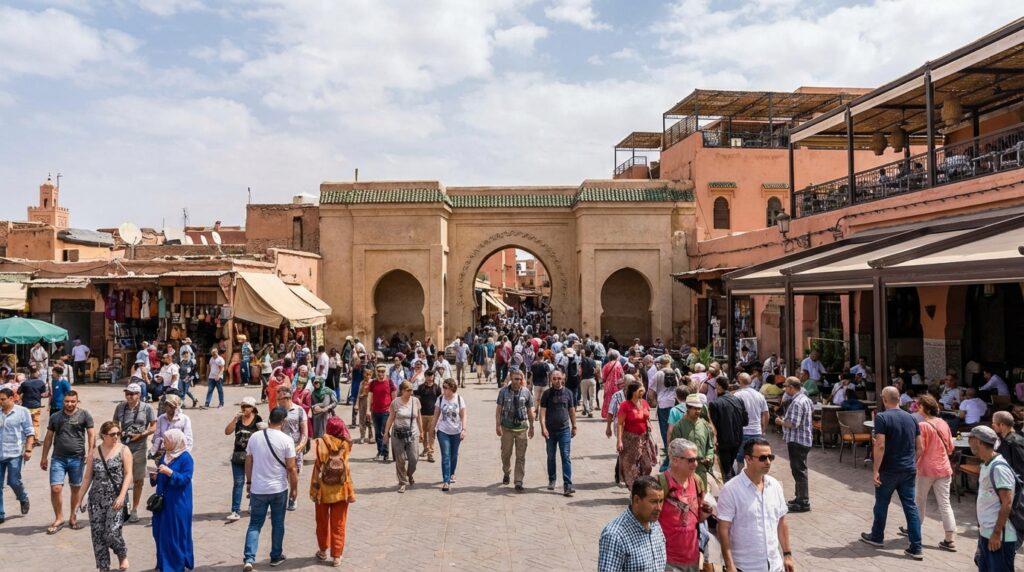
Visit Morocco crossed a historic threshold in 2025. The kingdom welcomed nearly 20 million tourists 19.8 million arrivals according to final estimates. This performance represents a increase of 14 % compared with 2024, making the country one of Africa's top destinations.
Welcoming nearly 20 million tourists by 2025 reflects the profound transformation of Moroccan tourism, driven by the enlightened vision of His Majesty King Mohammed VI, said Fatim-Zahra Ammorl, Minister of Tourism, Handicrafts and the Social Solidarity Economy. These figures confirm the relevance of our strategy and the role of tourism as a lever for growth and the creation of opportunities," she added, underlining the tangible impact on Moroccan citizens.
Strong growth in tourism receipts
Tourism receipts followed the same upward trajectory. They reached 138 billion dirhams, up 21 % year-on-year and 19 % above budget forecasts. The sector now contributes 7.3 % to Moroccan GDP and has generated 92,000 additional jobs since 2022, bringing the total to almost 894,000 direct positions.
According to the UN Tourism barometer, Morocco has officially established itself as the new global giant in the sector. It ranks 13th worldwide in terms of growth in arrivals, and dominates Africa and the Middle East. For the first time, the kingdom has even overtaken the Canary Islands in terms of total visitor numbers. Africa as a whole grew by only 8 %, so Morocco pulled the whole continent up despite inflation and global geopolitical tensions. This success is based on a clear strategy launched in 2023 and accelerated since then. It is based on well-honed development pillars: tour operating, upscale, air connectivity and customer diversification.
Organized tours: a powerful driver of visitor numbers
Package tours and all-inclusive packages, accessible to all budgets, have played a key role in this explosion in tourist numbers. French and international travel agencies, such as those belonging to the Syndicat des Entreprises du Tour Operating (SETO), have stepped up the number of package tours and all-inclusive packages, particularly to Marrakech, Agadir and the imperial cities. In 2025, Morocco was named Partner Destination of the Year by SETO, and bookings for package holidays rose from 8 to 11 %, according to industry barometers. All-inclusive packages in Agadir's seaside clubs and tours combining desert, mountains and medinas appealed to customers looking for simplicity and security. Offering a wide range of products in Morocco, the’Bourse-des-voyages online travel agency stands out for its accessible and popular offers: for example, Club Coralia Marrakech Ryads Parc & Spa 4*, located near the Palmeraie with spa, swimming pool, French-speaking entertainment and kids' club, ideal for families seeking relaxation and well-being, is all-inclusive from €445 (6 days/5 nights).
Tour operators have also highlighted small-group itineraries combining cultural discovery and hiking in the Sahara. At Fram, organized tours such as Trésors des villes impériales (departures from Marrakech, flights + full board), combining Marrakech, Fez, Rabat and Casablanca, are in the spotlight. Promovacances and TUI highlight all-inclusive clubs in Agadir (e.g. Club Marmara Les Jardins d'Agadir 4*, with aquapark and entertainment) and 8-15 day tours exploring southern Morocco or the desert, often starting at €546 for all-inclusive stays. Voyages Leclerc and others offer Imperial Cities and Chefchaouen tours (8 days/7 nights, full board, from around €399), with possible extensions in an all-inclusive club in Marrakech.
This accessibility, combined with a diversified offering (self-drive tours, hikes in the Atlas mountains, wellness breaks in Essaouira or kitesurfing in Dakhla), has made a major contribution to attracting families, couples and European travelers, particularly French, who account for almost 29 % of arrivals in Morocco.
Moving upmarket and diversifying our offering
Second pillar: moving upmarket. Morocco has adopted a radical luxury strategy to boost the average visitor basket. More and more 4 and 5-star establishments for organized stays, development of high-end guest houses, modernization of existing hotels via the Cap Hospitality program: the objective is clear, to increase tourism revenues from 138 billion dirhams in 2025 to 150 billion by 2026, while welcoming 22 million tourists.
New projects reinforce this dynamic: the planned arrival of the first Kimpton Marrakech at the end of 2026, a 67-room lifestyle hotel in a golf area to the south of the city, and Marriott openings (such as Autograph Collection and AC Hotels) between now and 2027. The multi-billion dirham Cap Hospitality program is financing the renovation of thousands of rooms in classified establishments, ensuring sustainable modernization and enhanced service quality to meet the expectations of a demanding international clientele. This diversified offering - from intimate riads to mega-resorts and design hotels - enables Morocco to appeal to a wide range of segments, from travelers seeking authenticity to absolute luxury enthusiasts, while significantly increasing average spending per visitor.
Enhanced air connectivity
Ryanair, a long-standing partner since 2006, has announced that it will increase its investment in Morocco to over $3 billion by the end of the decade (compared with $1.6 billion already committed). The Irish low-cost carrier serves 13 airports, operates five operational bases and offers 11 million annual seats. It plans to add a further 16 aircraft to its Moroccan fleet by 2034, and is targeting 20 million passengers a year by 2030, in anticipation of the soccer World Cup co-hosted with Spain and Portugal.
This dynamic extends to other major players in the airline industry. EasyJet, which has signed a strategic partnership with the’Moroccan National Tourist Office (ONMT) in 2025, will open its first base outside Europe in Marrakech in spring 2026, with three aircraft based there. This project, with an investment of 150 million euros, includes a 17 % increase in flights to Morocco in 2026 and targets 4 million annual seats, reinforcing the British low-cost carrier's position as number 2 in Marrakech and creating direct and indirect jobs. Other airlines such as Transavia, Vueling, Air France and Air Arabia Maroc complete this dense network, with new services and increased frequencies from France, Spain and other European countries, contributing to the explosion in air traffic and Morocco's accessibility for international tourists.
Royal Air Maroc, the national airline, is also stepping up its expansion to position Casablanca as a global hub. In 2026, it will launch at least ten new international routes, including Pointe-Noire (Congo), Tripoli (Libya), Beirut, Alicante, Bilbao, Palma de Mallorca and Verona, in addition to services already announced to St. Petersburg and Los Angeles. With a growing fleet (agreements for new Boeing 737 MAX and ambitions to reach 200 aircraft by 2037), RAM is strengthening frequencies on existing routes and supporting tourism through increased connectivity to Europe, Africa and the Americas.
The expansion of the air network is helping to diversify markets. For example, the kingdom has become a preferred refuge for Russian tourists, with a 29 % growth in arrivals by 2025. The country's temperate climate, varied offering and stability are attracting a clientele that is changing its habits. New direct connections, such as Saint Petersburg-Casablanca, are already planned.
Towards 26 million tourists in 2030
International rankings confirm Morocco's attractiveness as a tourist destination: Condé Nast Traveler, Travel + Leisure and Lonely Planet regularly rank Morocco among their top destinations. Online searches are exploding on booking platforms, particularly from Europe, North America and the Middle East.
For 2026 and beyond, ambitions remain high. The kingdom is aiming for 26 million visitors by 2030. The priority projects - airport expansion, diversification of the offer towards the Sahara, the High Atlas and the northern regions, and improved accommodation - have already been launched. With the 2030 World Cup in its sights, Morocco is no longer satisfied with being the African leader: it intends to become a global benchmark. The momentum is there. And there's every indication that the Cherifian kingdom, already the continent's leader, has more surprises in store.
Visit Morocco
Be the first to comment on this article