Japan Travel Guide 2026: Record Tourism, Budget, Transport & New Rules
Between ancient traditions, ultra-dense metropolises, and an efficient rail network, Japan continues to captivate European travelers. The archipelago is no longer just a distant dream—it now combines a weak yen, a post-pandemic tourism boom, and direct flights from France, making travel planning easier than ever.
The numbers speak for themselves. According to the Japan National Tourism Organization (JNTO), the country welcomed a record 42.7 million international visitors in 2025. The French market followed suit, with 457,600 French travelers recorded over the year—the highest figure since the early 1990s. This topic holds strong SEO potential, as it intersects with high-traffic search queries such as Japan travel, Japan budget, Japan visa 2026, JR Pass, Paris to Tokyo flights, and Japan travel tips.
Japan remains a destination where practical information is just as important as the desire to travel. From customs regulations and transport bookings to accommodation taxes and onsen access, a well-prepared trip avoids unnecessary expenses and misunderstandings on-site. This explains the constant public interest in up-to-date guide content.
Why Japan is attracting more travelers in 2026
The primary driver is the gap between perception and reality. Many visitors still associate Japan with a complex and expensive trip. Yet the landscape has shifted. The weak yen makes many expenses more affordable than in France, whether for meals, certain hotels, or everyday purchases. The JNTO highlights that the combination of affordability, safety, and diverse experiences has sustained demand for years.
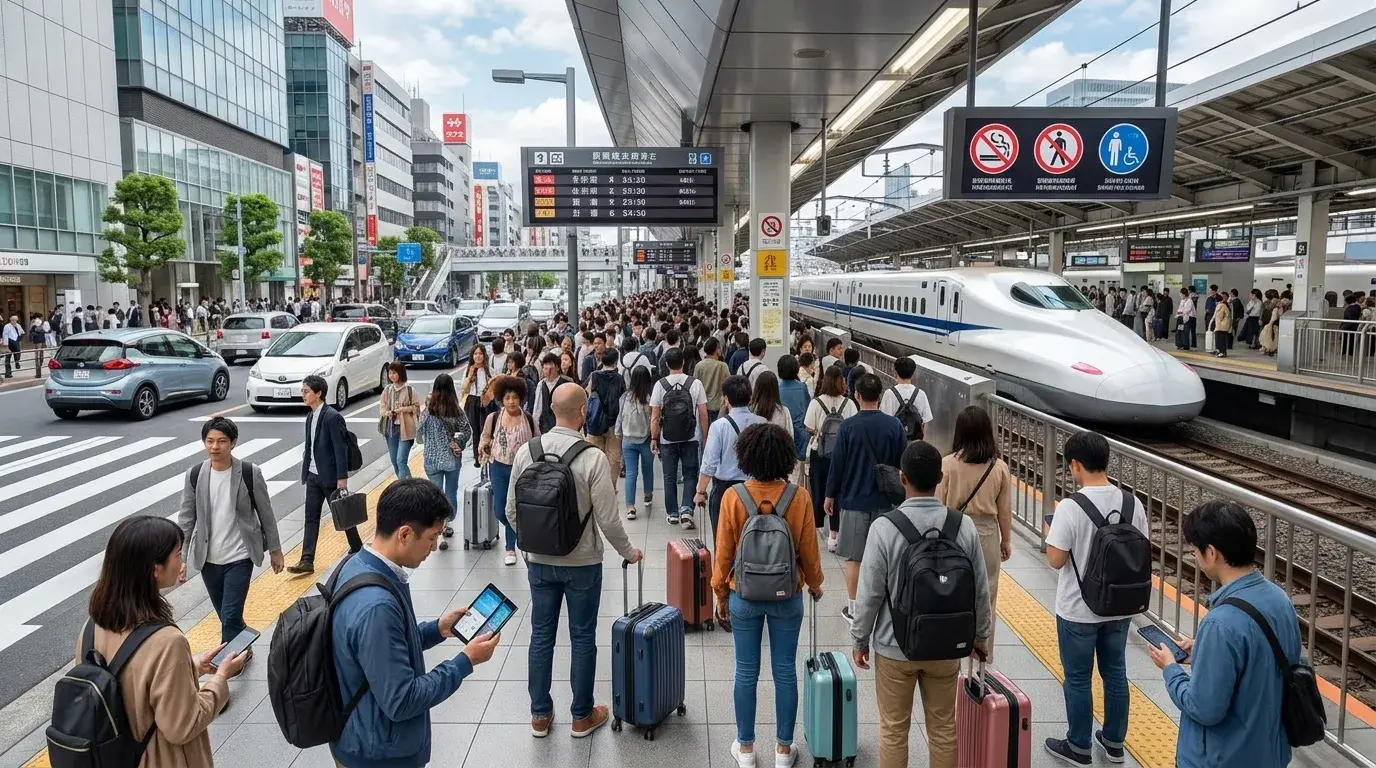
Structurally, Japan offers a highly readable travel experience, even for first-time visitors. Major cities are well-connected, infrastructure is reliable, signs are often translated into English, and trains remain the backbone of mobility. For a French traveler, this reduces entry barriers and explains why Tokyo, Kyoto, and Osaka remain the most sought-after anchors.
The country also benefits from a contrast effect. Visitors come to experience ultra-modern districts alongside ancient temples, volcanic landscapes, coastal areas, rural villages, and less-visited regions. This diversity appeals to a wide range of profiles, from first-time Asia travelers to seasoned long-haul explorers.
Direct flights and organized tours simplify departure
Air access is a major SEO driver in travel content, as it’s often the first step in trip planning. From Paris, Air France operates direct flights to Tokyo and Osaka, while Japan Airlines and ANA also offer nonstop services. The Paris-Tokyo flight takes about 12 hours, arriving at either Narita or Haneda airports depending on the airline.
For travelers seeking a structured itinerary, several agencies promote organized tours with varying budgets. Bourse des Voyages, for example, offers packages starting at €1,974 per person, including flights and accommodation. Other specialists like Destination Japon, Japaventura, and Japan Experience focus on tailor-made trips, small groups, or French-speaking guidance. This positioning meets real demand: while logistics in Japan are straightforward, a well-crafted itinerary saves time, especially for first-time visitors.
Japan budget: How much to plan on-site
Budget remains a central concern for online audiences. While costs vary by season, cities visited, and comfort level, several observers note that the cost of living in Japan is roughly 20% lower than in France.
For an economical stay, budget around €65 to €110 per person per day. Mid-range travelers should plan between €120 and €220 daily. High-end or luxury options start at around €250 per day. These estimates cover accommodation, meals, and urban transport, but not long-distance train tickets or premium activities.
The exchange rate remains the key lever. A favorable yen makes Japan more accessible, but travelers must also account for internal transport costs, especially if their itinerary spans multiple regions. Those moving frequently should compare point-to-point ticket prices with rail passes.
JR Pass, Suica, PASMO: Smart transport choices
The JR Pass remains a highly searched topic, though its value has shifted with recent price hikes. Since October 2023, its cost has surged by about 70%. For many travelers, it’s only cost-effective on itineraries packed with shinkansen (bullet train) rides. Always simulate your planned routes before purchasing, as a global pass isn’t always the best option.
Meanwhile, physical Suica and PASMO cards are back in stock after semiconductor shortages. They’re now available at major airports and train stations. For urban travel, their return simplifies arrivals, particularly in Tokyo and its surroundings.
What to know about travel formalities
For French citizens, no visa or JESTA is required for short tourist stays in 2026, as long as the visit doesn’t exceed 90 days. The JESTA system exists but will only apply to visa-exempt travelers starting in 2028. This is crucial for searches related to Japan visa 2026 or Japan entry requirements.
The new tax-free refund system, launching November 1, 2026, is another key update. Travelers will pay VAT-inclusive prices in stores and then claim refunds at the airport after customs checks. This means keeping receipts and allowing extra time before departure.
Driving permits are another point to verify in advance. To rent a car in Japan, rental companies require an International Driving Permit (1949 model) or an official certified translation. Without this document, rentals may be refused—a critical detail for travelers planning to explore beyond major rail hubs.
Stay taxes, overtourism, and local rules to anticipate
Japan’s tourism success has led to adjustments. From March 2026, Kyoto has raised its accommodation tax, with progressive rates reaching up to 10,000 yen per night per person in luxury establishments. Tokyo and Osaka also impose stay taxes, altering budget calculations for city stays.
The ascent of Mount Fuji is another regulated experience. On the Yoshida Trail, a daily quota of 4,000 climbers is enforced during peak season, with mandatory reservations and a ¥4,000 access fee. This directly impacts searches for Japan travel 2026 and Japan practical tips.
Regional experiences and new ways to travel
Facing pressure on overvisited sites, authorities are promoting trips off the beaten path. The Nakasendo Trail, the Shikoku 88 Temple Pilgrimage, and the Michinoku Coastal Trail are among the routes gaining traction. These itineraries appeal to European travelers seeking nature without excessive marketing hype.
The rise of renovated traditional houses as accommodations aligns with this shift. Japan aims to distribute tourist flows while maintaining an offer compatible with international demand. This also explains the steady arrival of new travel formulas blending heritage, rail mobility, and regional tourism.
What Japan offers French travelers in 2026
For a Francophone audience, Japan remains a destination of contrasts—but easier to organize than many assume. Direct flights are available, transport cards are back in stock, entry rules are clear, and budgets can be managed with good planning. On the flip side, major cities are becoming pricier, iconic sites enforce quotas, and local customs—like the absence of tipping—may surprise first-time visitors.
Japan retains strong SEO potential because it meets a real demand for concrete information. Travelers seek both inspiration and practical guidance on costs, transport, and procedures. This blend keeps the topic high in search rankings, with expectations far beyond mere wanderlust inspiration.
Be the first to comment on this article