Italy Posts Record Summer with 98.8 Million Passengers: What Travelers Should Expect This Winter
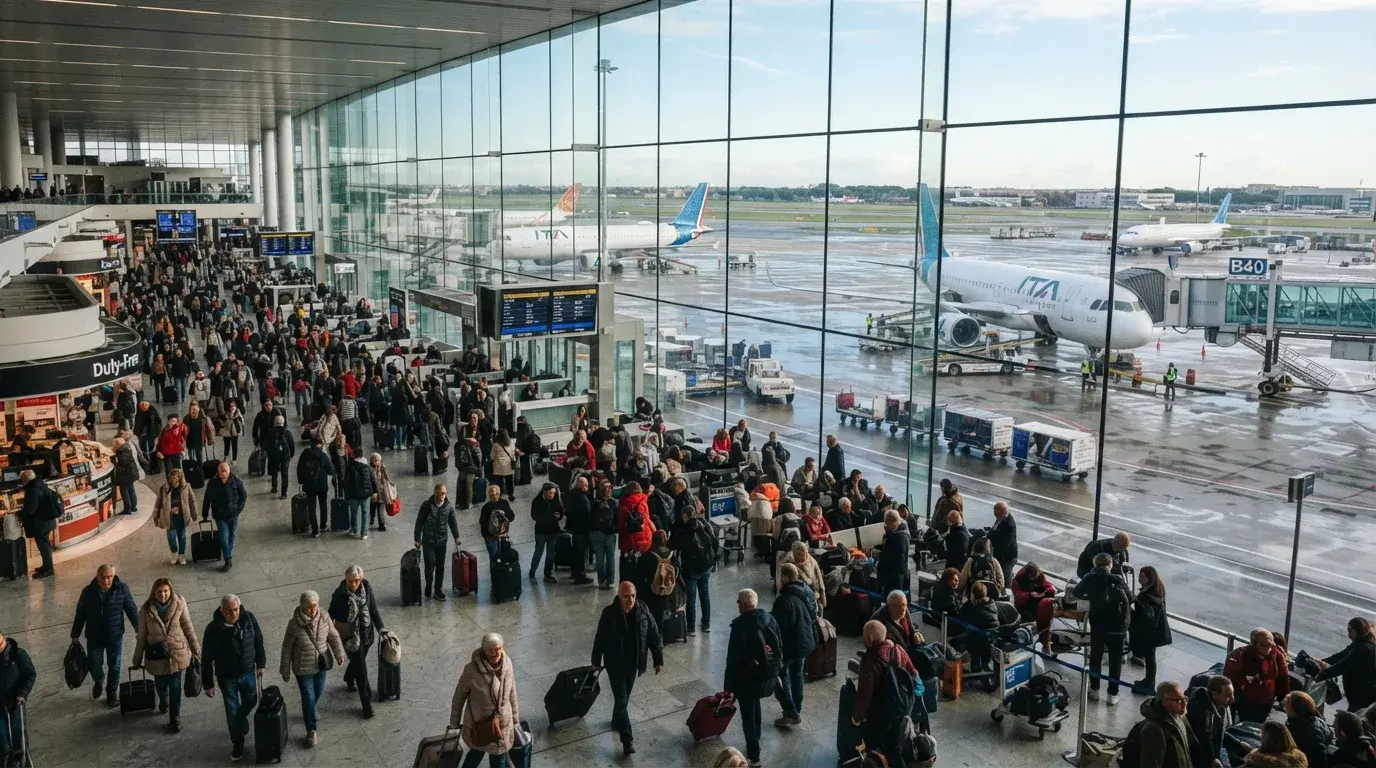
Italy’s airports delivered a record-breaking summer in 2026, welcoming 98.8 million passengers between June and September. The performance exceeded forecasts, underscoring the country’s enduring appeal despite a tense geopolitical and economic climate. This momentum is expected to carry into the winter season as airlines adjust their schedules to meet persistent demand.
Data released by Assaeroporti, Italy’s airport operators’ association, shows a 6.3% year-on-year increase in traffic. International demand accounted for nearly seven out of ten passengers during the summer months. Despite geopolitical tensions and soaring kerosene prices, Italian airports successfully captured passenger flows, even when traditional routes were disrupted.
This achievement is all the more notable given the shifting Europe-Asia routes caused by Middle Eastern tensions, which forced airlines to rethink their networks. Italian airports seized the opportunity to bolster their appeal. “The summer results confirm the value of an airport network capable of capturing flows and opportunities, even as travel geography evolves,” says Valentina Menin, Assaeroporti’s CEO.
International traffic reached 68.4 million passengers, representing nearly 70% of the summer total. This performance highlights Italy’s ability to attract both transit and final-destination travelers, despite logistical and economic hurdles. The 2026-2027 winter season is shaping up to be a critical period to capitalize on this momentum as airlines and airport operators finalize their programs.
Italy’s Top-Performing Airports This Summer
Among Italy’s airports, Rome-Fiumicino retained its leading position over the first nine months of the year, handling 39.31 million passengers (+0.7%). Milan-Malpensa ranked second with 24.08 million (+1%), followed by Bergamo with 13.87 million (+7.4%). Naples and Venice rounded out the top five, with 11.13 million (+7.9%) and 10 million (+9.9%) passengers, respectively.
Milan-Linate closely trailed with nearly 9 million passengers (+8.7%). These figures reflect sustained growth in Italy’s major cities, with particularly strong increases at secondary airports. Conversely, Catania saw a 3.3% decline due to Etna-related closures over the summer. Some flights were rerouted to Comiso, whose traffic surged to 324,537 passengers.
This performance spread underscores the diversity of Italy’s airport network, where major coastal hubs and regional airports play complementary roles. Infrastructure investments and terminal modernization have also contributed to growth by enhancing passenger experience and operational efficiency.
Soaring Fuel Costs, but No Shortages Expected
Despite kerosene price hikes squeezing airline margins, Italian airports have avoided shortages. Assaeroporti notes that diversified supply chains and increased domestic production have supported deliveries. “The evolving geopolitical context and airlines’ route and frequency adjustments—particularly in response to fuel costs—could impact future prospects,” warns Valentina Menin.
This constraint has prompted airlines to optimize their schedules to mitigate energy cost impacts. Airports, meanwhile, are focusing on boosting commercial performance to offset lower revenue from airport fees. Retail and service offerings at airports are playing a key role in this strategy, attracting passengers willing to spend despite economic headwinds.
Prospects for the 2026-2027 winter season remain cautiously optimistic. With a projected 5.5% growth over the first nine months of the year, Italian airports could surpass 240 million passengers in 2026. An ambitious target, but one that appears achievable if current trends hold and airlines maintain their investments in Italy’s network.
What Travelers Should Know for This Winter
For travelers planning a trip to Italy this winter, several factors are worth noting. Demand remains robust, particularly on international routes. Airports like Rome-Fiumicino, Milan-Malpensa, and Bergamo continue to serve as major hubs with high flight frequencies and strong connectivity. Transit and connecting passengers will benefit from this density, even in the off-season.
Additionally, rising kerosene costs may drive up airfares. Both low-cost and legacy carriers are adjusting prices based on demand and operational expenses. Travelers are advised to book early to secure better rates and avoid last-minute price surges.
Italy’s airports are also investing in infrastructure upgrades. Rome-Fiumicino, for example, is modernizing terminals and improving flow management to deliver a smoother experience. Passengers can expect high service levels, even during peak periods.
With a record summer behind them and a promising winter ahead, Italy’s airports are solidifying their role as key players in European aviation. A trend worth watching for travelers and industry professionals alike.
Why Is Italy a Top Passenger Destination?
Italy’s appeal stems from several factors. The country remains a top tourist destination, with cities like Rome, Venice, Milan, and Naples drawing millions of visitors annually. Historic sites, cuisine, and cultural heritage are major draws.
Italy also serves as a natural hub for travelers transiting between Europe and other continents. Airports like Rome-Fiumicino and Milan-Malpensa are ideal connection points for passengers heading to the Americas, Asia, or the Middle East.
Finally, the country is investing in innovation and airport infrastructure. Terminal modernization and expansion projects aim to enhance passenger experience and strengthen Italy’s competitiveness against other European hubs.
With sustained growth and strong international demand, Italy is cementing its position as a leader in European air travel—a model for other countries on the continent.
Be the first to comment on this article