Brazil Set for Record Tourism in 2026 as Air France Boosts Winter Flights
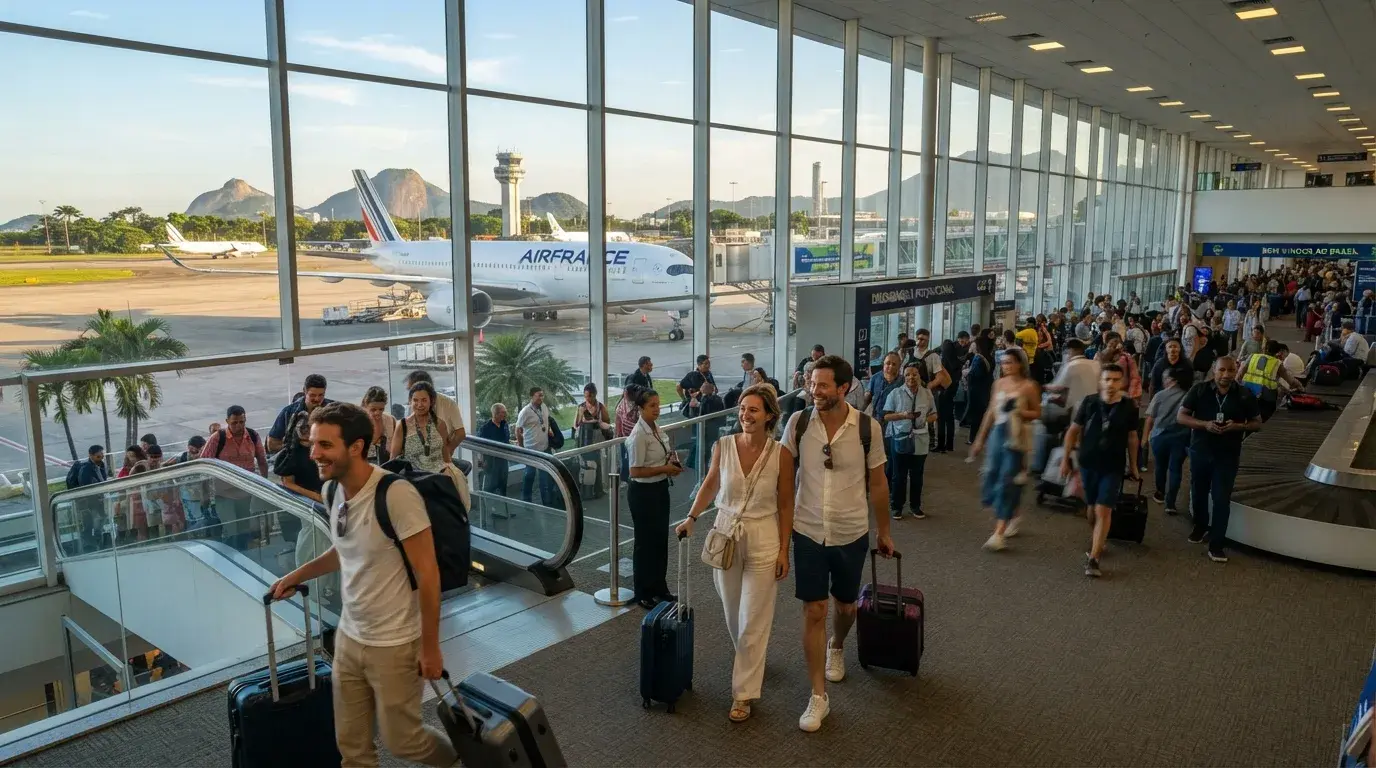
Brazil is poised for a record-breaking tourism season in 2026, driven by a 10% increase in international visitor spending between January and September, totaling $8.38 billion. This figure reflects a growing economic and cultural appeal among international travelers. In response to surging demand, Air France is expanding its services to Rio de Janeiro, Fortaleza, and Salvador, introducing unprecedented frequencies for the 2026-2027 winter season. This news comes at the perfect time for French travelers eager to experience Brazil’s beaches, vibrant culture, and pristine natural landscapes.
The numbers speak for themselves: 7 million international tourists have already visited Brazil in 2026, a figure close to the annual record of 9.2 million set in 2025. The country’s ability to attract ever-growing numbers of visitors, despite a still-fragile global economic climate, is partly due to its air connectivity, particularly from Europe. Air France, a longstanding player in the South American market, is capitalizing on this trend by offering two daily flights between Paris-Charles de Gaulle and Rio de Janeiro starting December 21, 2026—a first in several years, signaling renewed confidence in the destination.
Beyond Rio de Janeiro, Fortaleza will now enjoy daily service during peak periods, up from just five weekly flights in 2025. Meanwhile, Salvador de Bahia will see two additional weekly flights starting January 18, 2027, a welcome boost for travelers looking to explore the cultural and historical riches of this iconic region. These enhancements are part of a 3% overall increase in Air France’s capacity to South America compared to the previous winter, confirming the enduring appeal of the continent.
“Brazil is like a continent. You need to visit it multiple times,” says Jérôme Caro, CEO of Destino Mundo, a travel agency specializing in trips to the country. He advises prioritizing coherent itineraries over trying to see everything in one trip. For example, a Rio–Salvador combo allows travelers to experience two complementary facets of Brazil: the bustling energy of Rio de Janeiro and the historic richness of Salvador, a UNESCO World Heritage site. This advice is particularly relevant for French travelers, whose average spend for a trip to Brazil remains high but who are driven by a true desire for discovery.
This strategy of splitting trips seems even more pertinent given Brazil’s abundance of lesser-known regions. The coastline of Piauí state, with its Parnaíba Delta, Lençóis Maranhenses, and Jericoacoara, is among these hidden gems. To improve access to these destinations, the government of Piauí has announced the resumption of flights by Brazilian carrier Azul between Belo Horizonte-Confins and Parnaíba, with two weekly frequencies. This initiative aligns with efforts to develop secondary, less congested, yet equally captivating tourist corridors.
Accessibility and Connectivity Drive Brazil’s Tourism Boom
Brazil’s tourism surge isn’t solely due to its landscapes or culture—it’s also the result of proactive policies to enhance air connectivity. Since April 2026, the Brazilian government has implemented a temporary measure eliminating federal PIS/Pasep and Cofins levies on aviation fuel, helping to stabilize ticket prices amid rising costs linked to Middle East geopolitical tensions. While fares remain a barrier for some travelers, the move has eased financial pressures on airlines.
For airlines, this trend presents a major opportunity. Air France isn’t the only carrier boosting its Brazil routes; others like Air Europa and LATAM are also expanding options for travelers seeking flexibility. However, Air France’s offering stands out for its integration into a broader network, facilitating connections to other South American or Caribbean destinations. This makes it a preferred choice for French travelers looking to optimize both travel time and budget.
Rio de Janeiro Remains a Must-Visit, But Not the Only Option
Rio de Janeiro continues to dominate Brazil’s appeal. According to data from the Rio de Janeiro tourism observatory, the city welcomed 10.7 million visitors between January and October 2026, including 1.9 million international tourists—a 7.8% increase from 2025. These figures cement Rio’s status as one of the continent’s top destinations. The New Year’s Eve celebrations on Copacabana, held at year-end, are expected to further boost its attractiveness, drawing thousands of tourists from around the world.
Yet, despite its popularity, it’s essential to remember that Rio is just one stop among many. Brazil’s diversity is such that it’s impossible to experience everything in a single trip. Travelers are encouraged to explore other regions, such as the Pantanal for an immersive nature experience, the Amazon for a unique adventure, or the beaches of Florianópolis for a more intimate seaside getaway. Each region offers a distinct experience, justifying Jérôme Caro’s advice: “You need to visit it multiple times.”
High Prices, Unforgettable Experiences
While Brazil attracts more tourists than ever, it remains a destination where budgets can quickly escalate. Jérôme Caro of Destino Mundo notes that “the challenge with Brazil is the prices.” However, this financial hurdle is often offset by the quality of the experience. French travelers, in particular, are willing to invest in authentic adventures far from typical tourist crowds. Specialized agencies like Destino Mundo play a key role in guiding travelers, offering tailor-made itineraries suited to their desires and budgets.
For those looking to make the most of their trip, booking flights and accommodations months in advance is advisable, especially during peak periods like the end-of-year holidays or the Southern Hemisphere summer. Promotional offers exist but are often limited and sell out quickly. Rigorous planning is essential to avoid disappointment.
Why Is Brazil a Destination of the Future for French Travelers?
Several factors explain Brazil’s growing appeal to French travelers. First, the country’s rich cultural heritage, with cities like Salvador and Recife offering a unique colonial and African legacy in South America. Second, its diverse landscapes—from white-sand beaches and tropical forests to mountains—cater to all types of travelers, from those seeking relaxation to adventure enthusiasts. Finally, Brazil is an accessible destination, with direct flights from Paris or quick connections via major European or American hubs.
Air France’s expanded Brazil route network aligns with this long-term trend. By offering additional frequencies and more frequent services, the airline makes it easier to access a destination that previously often required long layovers or flight changes. For French travelers, this means less time spent in transit and more time exploring the country.
In conclusion, Brazil is more than ever a destination to prioritize for travelers seeking escapism, culture, and nature. With record tourism in 2026, enhanced air connectivity, and a diverse range of experiences, the country is positioning itself as one of the must-visit destinations in the years to come. For those still hesitating, now is the time to take the leap—Brazil is waiting for you.
Be the first to comment on this article