Barcelona El Prat Flooded: 385 Flights Canceled in Two Days, Here’s How It Affects Your Travel
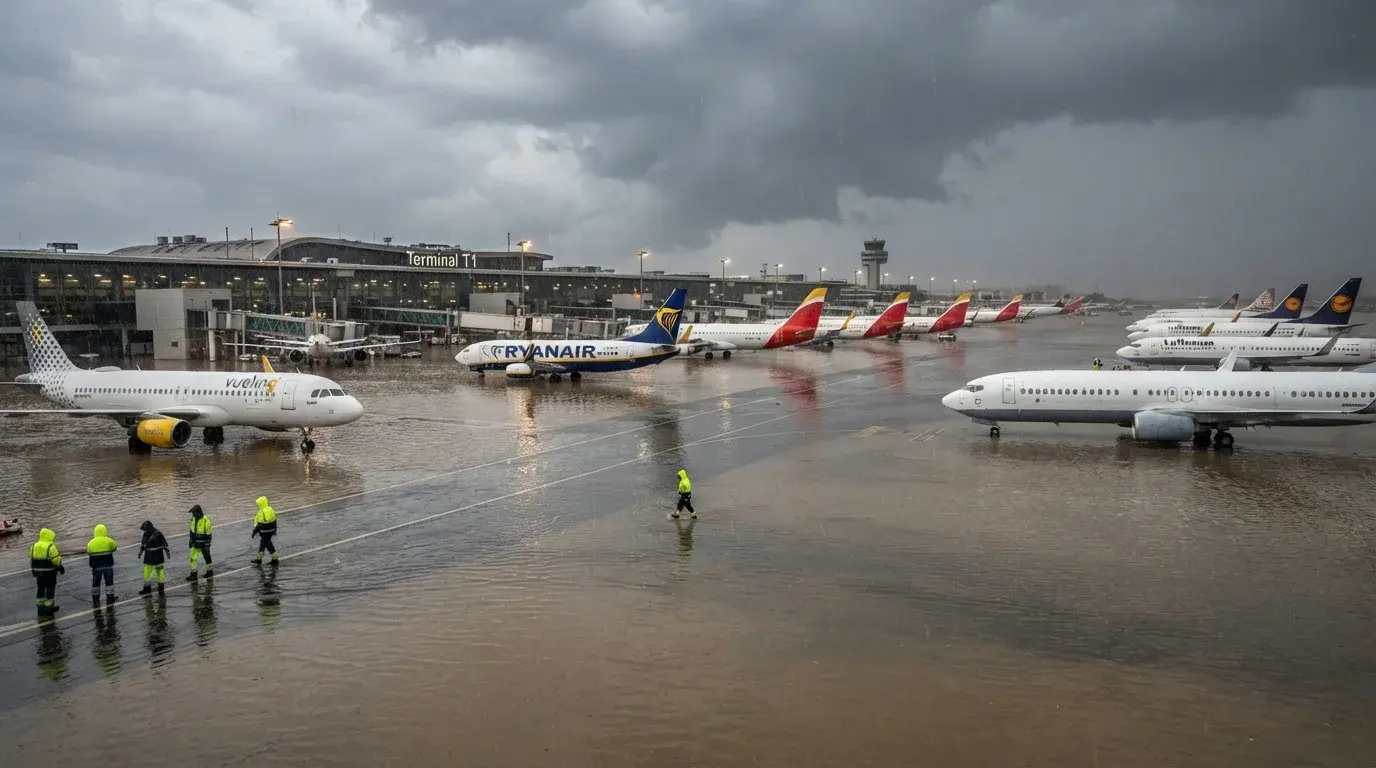
A severe weather episode paralyzed Barcelona-El Prat Airport over the weekend, with 385 flights canceled in just two days. Between Saturday, October 3, and Sunday, October 4, torrential rains swept across Catalonia, turning runways into rivers and plunging Spain’s second busiest airport into chaos. It wasn’t just the rain disrupting operations: flooded roads, rail disruptions, and the collapse of urban transport systems compounded the strain on an already tense traffic flow. If you were due to depart or arrive in Barcelona this weekend, here’s what you need to know to anticipate the impact on your travel plans.
Josep Tarradellas Barcelona-El Prat Airport, the country’s second busiest after Madrid-Barajas, recorded 385 cancellations between Saturday and Sunday. According to figures from the Catalan Civil Protection, 220 flights were canceled on Saturday and 165 the following day, affecting both departures and arrivals. This situation highlights the vulnerability of a hub that has become central to European air traffic, particularly for intra-European connections and transfers to Spain or North Africa.
Official figures from Aena, the Spanish airport operator, differ slightly: the company reported around 200 cancellations for Sunday alone, without specifying whether all were directly caused by the extreme weather. However, Flightradar24, which tracks real-time air traffic, provides a more precise measure of the scale of the disruption. On Saturday, 247 flights were canceled and 510 delayed. On Sunday, cancellations reached 165, with an additional 297 delays. While these figures are partial, they illustrate the ripple effect triggered by the heavy rainfall, far beyond simple cancellations.
The problem extends beyond rain on the runways. During intense storm events, air traffic control temporarily reduces airport capacity for safety reasons. Aircraft must be spaced further apart, significantly slowing the rate of takeoffs and landings. At Barcelona-El Prat, this capacity reduction was enough to create a domino effect: an initial delay on one flight can cascade through multiple rotations, disrupting crew schedules and aircraft rotations. The situation was exacerbated by the collapse of ground alternatives, with flooded roads and blocked trains preventing travelers from reaching the airport.
The Red Cross intervened on a large scale. According to its figures, around 800 people were directly assisted at the airport, while thousands more were supported at Barcelona-Sants and Camp de Tarragona train stations. A stark reminder that, even in Europe, extreme weather can turn a simple layover into a logistical nightmare.
A European hub under pressure
Barcelona-El Prat is no longer a regional airport. With over 50 million passengers annually, it has become a major hub for intra-European flights, connections to Spain, and networks operated by airlines such as Vueling, Ryanair, easyJet, and Iberia. A reduction in capacity of just a few hours is enough to disrupt hundreds of rotations, with effects that can ripple through the system for days.
The airlines most affected by these cancellations were those operating hubs at Barcelona, such as Vueling for intra-European flights or Iberia for connections to Latin America. A disruption at El Prat can have knock-on effects on complex itineraries, with passengers stranded awaiting re-routing or forced to alter their travel plans.
For affected travelers, the first step is to contact your airline. In the event of a cancellation, EU passenger rights regulations provide several options: a full refund, re-routing to your final destination at the earliest opportunity, or changing your reservation without additional fees. Airlines are also required to provide assistance, including meals, water, and, if necessary, accommodation with transport between the airport and your lodging.
However, financial compensation is not automatically granted. If the airline can prove that the cancellation was due to extraordinary circumstances—such as severe weather—it is not obligated to pay compensation. Nevertheless, the obligation to provide assistance (meals, accommodation, communication) remains valid regardless of the cause of the disruption.
How to avoid pitfalls during disruptions at Barcelona
In such situations, anticipation is key. Your first reflex should be to regularly check the status of your flight on the airline’s website or app. Airlines typically update information in real time, including details on delays, cancellations, and re-routing options. If your flight is canceled, don’t wait passively: contact the airline immediately to learn about the proposed solutions.
If you miss a connection, check whether your original booking covers multiple segments. If so, the airline is required to re-route you to your final destination, even if it involves a change of itinerary. Some airlines, such as Air France-KLM or Lufthansa, offer online tools to streamline this process. Don’t hesitate to use them.
If you absolutely must travel to Barcelona in the coming days, opt for direct flights from your departure point. Where possible, avoid connections via El Prat, which remains vulnerable to extreme weather. For travel within Spain, alternatives exist: Reus Airport, about 100 kilometers from Barcelona, or Girona-Costa Brava Airport, which can absorb some of the traffic in the event of a crisis.
Finally, consider taking out travel insurance that covers cancellations and delays. Some policies offer additional compensation for major disruptions, even if the airline is not required to pay compensation. Check the included guarantees, particularly for accommodation costs or train tickets in the event of prolonged blockages.
Barcelona-El Prat and the challenges ahead
This episode also underscores the structural challenges facing Barcelona-El Prat. Growing traffic, combined with increasingly unpredictable weather, calls for a rethink of infrastructure resilience. Aena, the airport operator, has already begun work to improve the airport’s resilience, including strengthening runway drainage systems and modernizing air navigation equipment.
But these measures take time. In the meantime, travelers must contend with a reality: even major European airports are not immune to the whims of the climate. Barcelona-El Prat remains an essential hub, but its vulnerability to extreme weather makes it a weak point in the global air network.
For those planning a trip to Catalonia, caution is advised. Check weather forecasts before departure and build buffer time into your schedule. If you must land or depart from Barcelona, opt for early morning slots, which are typically less prone to storms. Always have a Plan B ready: a flexible ticket, a refundable hotel booking, or an alternative ground route to reach your destination.
The extreme weather that struck Barcelona this weekend is not an isolated incident. With climate change, such events may become more frequent and intense. For airlines and passengers alike, it’s a reminder that air travel, despite technological advances, remains dependent on weather conditions. And sometimes, the best strategy is to anticipate rather than react.
Be the first to comment on this article