Top airport dining: Singapore, Seoul and Tokyo lead Skytrax rankings
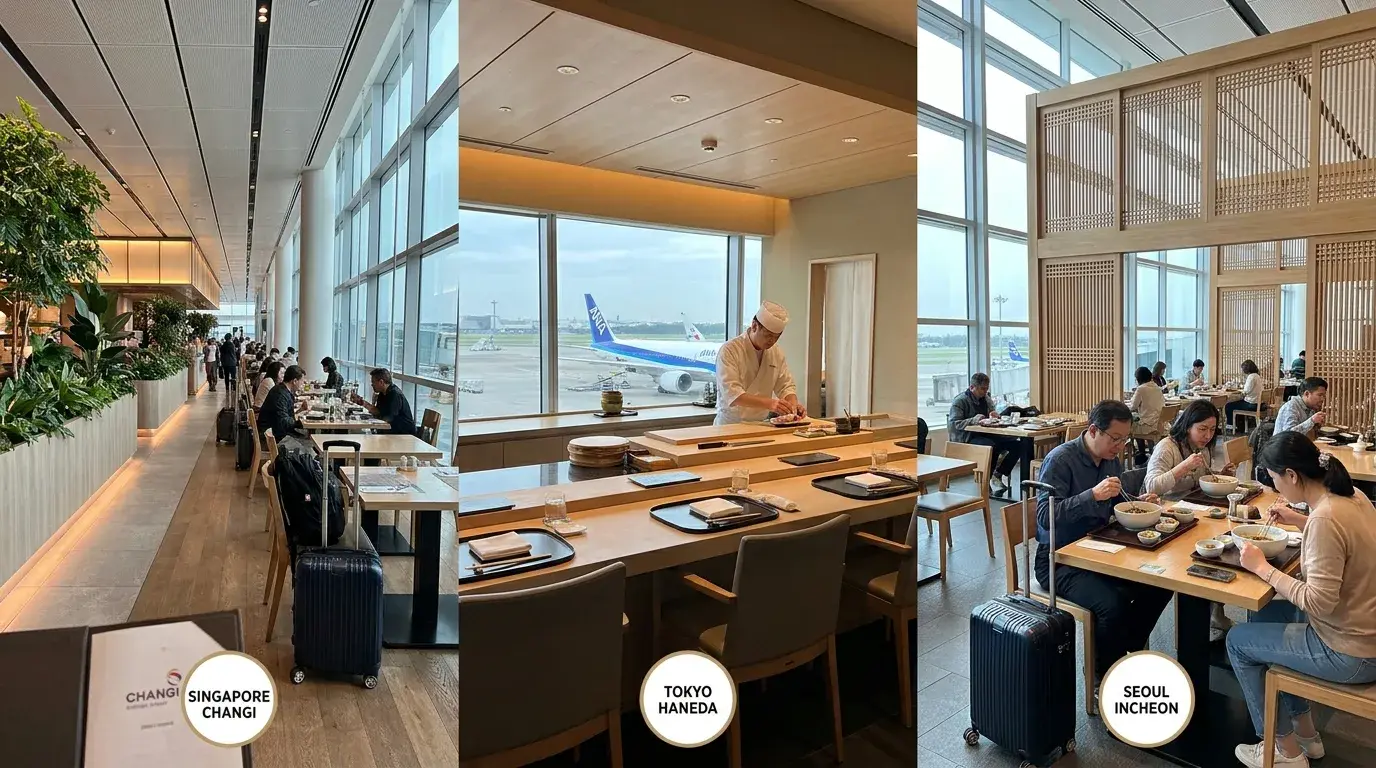
Airport dining is no longer just a waiting-room necessity—it shapes an airport’s image, passenger satisfaction, and even international rankings. According to Skytrax’s 2026 Best Airport Dining Awards, **Singapore-Changi** leads the list, ahead of **Seoul-Incheon** and **Tokyo-Haneda**. This confirms a clear trend: Asian hubs have transformed quick meals, coffee breaks, and pre-departure dining into full-fledged commercial arguments.
This topic holds strong SEO potential, combining high-traffic travel queries like best airports, airport dining, Skytrax, Singapore-Changi, Seoul-Incheon, and Tokyo-Haneda. It appeals to transit passengers, airport enthusiasts, and long-haul travelers seeking quality pre-flight dining options.
Skytrax’s rankings go beyond mere restaurant presence. They evaluate variety, perceived quality, and value for money—a balance that explains why some hubs stand out while others offer standardized, often overpriced options.
Changi: A dining experience designed like a travel service
At **Singapore-Changi**, dining extends far beyond departure lounge cafés. The terminal and Jewel complex boast a dense offering, from quick snacks to refined dining. Skytrax highlights the variety, quality, and perceived value of restaurants, bars, and cafés—key factors that place the Singaporean hub at the top.
Changi doesn’t just feature global chains; it champions local and Asian concepts, offering passengers alternatives to globalized fast food. Outlets like Kam’s Roast, Poulet Bijou, and contemporary izakayas embody this approach. Dining becomes an extension of the journey, not just a convenience.
This strategy aligns with Changi’s broader reputation. The hub understands that connecting passengers often spend hours in transit—better to provide clear, high-quality options than a succession of interchangeable food outlets.
Seoul-Incheon and Tokyo-Haneda: Hubs balancing speed and quality
Ranked second, **Seoul-Incheon** reinforces the strength of South Korean hubs in passenger experience. The airport blends local cuisine, international offerings, and high turnover, catering to transit passengers from Asia, Europe, and North America with diverse expectations but shared demands for efficiency.
**Tokyo-Haneda** rounds out the top three with a similar approach: fast service, consistent quality, strong Japanese offerings, and familiar Western brands for those seeking comfort. Skytrax’s rankings reward a simple logic: allowing travelers to eat well without wasting time or facing inflated prices.
The World Airport Awards emphasize that Best Airport Dining isn’t just about quantity—it’s about the overall impression left on passengers. The challenge isn’t just filling terminals with restaurants; it’s ensuring the experience is cohesive, accessible, and varied enough to meet different customer profiles.
Rome, Munich, and European hubs defending their identity
Skytrax’s 2026 top 10 also includes **Rome-Fiumicino**, praised for its pizzerias, trattorias, and wine bars. This strategy is clear: immerse travelers in local cuisine before departure. Italian dining’s global recognition makes it a hit with a broad audience.
**Munich** also ranks among Europe’s best for airport dining, offering around 60 restaurants, cafés, and bistros. From beer gardens to regional products and quick meals, the Bavarian hub balances pragmatism with identity. The goal? Let passengers buy a meal without falling into tourist traps.
For major European hubs, the challenge differs from Asia’s. Space constraints and diverse traffic demand creative solutions. Even without Changi’s or Incheon’s scale, hubs can still emphasize culinary identity, service quality, and clear offerings.
Paris-Charles de Gaulle: A solid reputation
While **Paris-CDG** doesn’t top this dining-specific ranking, its international standing remains strong. Publications like Food & Wine frequently highlight spots like Bistrot Benoît, La Table de Michel Roth, or I Love Paris by Guy Martin—establishments that elevate transit dining beyond quick bites.
For CDG, this premium shift is a key attractiveness lever. Long-haul passengers, especially those in transit, expect more than a meal tray or fast coffee. They seek solutions where waiting time becomes useful—or even enjoyable—without breaking the bank.
Skytrax underscores a critical point: dining is part of a hub’s overall quality. Rankings reward selection, outlet types, offer quality, and perceived value for money—a combination that explains Asia’s rise, better equipped than many to meet modern demands.
Why airport dining increasingly influences airport choice
Airport dining has become a tangible indicator of a hub’s modernization, touching comfort, flow management, and time spent in terminals. Passengers who can eat well without detours leave with a more positive impression. Conversely, poor or overpriced options quickly tarnish an airport’s image.
Culinary offerings also drive economic benefits. Restaurants, cafés, and bars generate revenue while fostering loyalty among premium and leisure travelers. For international hubs, dining is no longer an afterthought—it’s a competitive differentiator.
As airlines and airports vie to enhance passenger experience, Skytrax’s rankings remain closely watched. They offer a snapshot of current expectations: diversity, quality, fair pricing, and visible local identity. On this front, Singapore, Seoul, and Tokyo lead, but the gap could narrow if other European or North American hubs step up their game.
For travelers, such rankings serve as practical guides. A long layover at Changi, Incheon, or Haneda feels entirely different from one in a terminal with sparse dining options. It’s this very difference—highly tangible—that makes the topic a key indicator for aviation professionals and frequent flyers alike.
Be the first to comment on this article