India extends its UDAN program to boost regional aviation until 2036
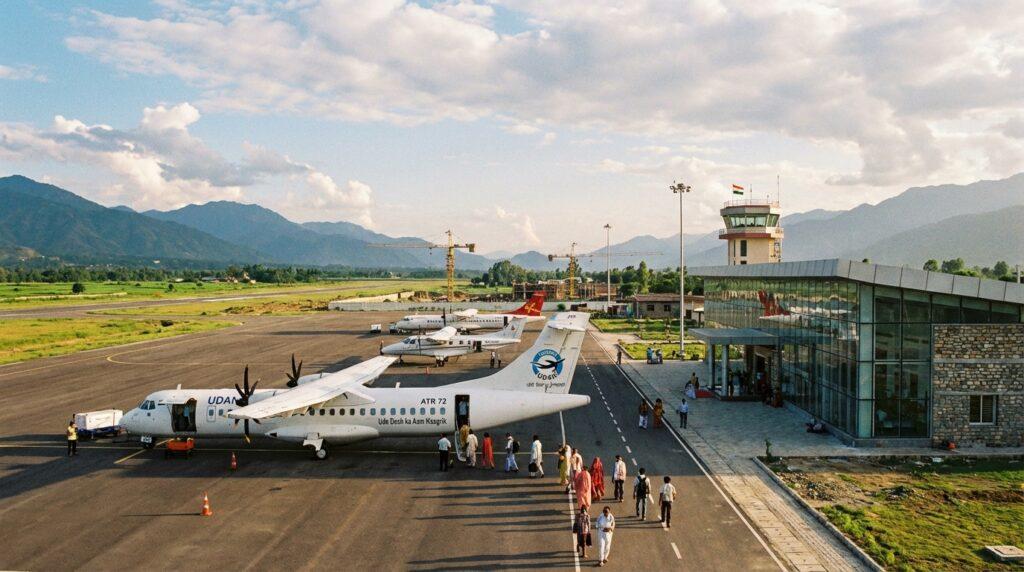
The Indian government has approved a major investment plan worth over $3 billion to transform its regional aviation. The program, an extended version of the UDAN (Ude Desh ka Aam Nagrik) project, aims to develop 100 new airports and 200 heliports, extending its scope to 2036. The aim is to mesh the Indian territory with a network of 350 to 400 hubs by 2047, boosting connectivity and economic development in less accessible regions.
UDAN extended: a substantial investment in the future of Indian aviation
The UDAN program, initially launched in 2016, has already enabled more than 660 new air routes to be brought into service and nearly a hundred airports to be reopened or built, carrying more than 16 million passengers. The new phase, extended over a further ten years (from fiscal 2026-2027 to 2035-2036), represents an envelope of around $3.06 billion (almost Rs. 28,840 crores). This funding will cover both physical infrastructure - modernizing existing airports and creating new sites - and financial support for regional airlines, notably via viability gap funding mechanisms.
The Minister of Civil Aviation, Ram Mohan Naidu Kinjarapu, described the decision as ’historic«, underlining the program's past achievements: »Over the past ten years, UDAN has added 663 new routes and 95 new airports«. He added that the new phase will see the addition of »another 100 airports and 200 heliports«, reaffirming that »airports are not only transit hubs, but also economic engines for the regions«.
An ambitious air network for 2047
This expansion is in line with Prime Minister Narendra Modi's long-term vision, which anticipates a network of 350 to over 400 airports by 2047, an ambitious goal compared to the 160 hubs currently in operation. The development of these infrastructures is seen as an essential lever to support the country's economic and tourism growth. Between 2014 and 2025, the number of airports in India has already more than doubled, from around 74 to over 160.
The new phase will focus on the least connected regions, such as the northeastern states, mountainous areas, «aspirational» districts and island territories with limited road and rail networks. The aim is to open up these areas and stimulate their development by air.
Challenges and adjustments to the UDAN model
Despite its successes, the UDAN program has not been without its challenges. Analyses have revealed that a significant proportion of the routes initially created have ceased to be operated for lack of sustainable profitability, even with subsidies. The «modified» version of the scheme seeks to alleviate these difficulties by better calibrating financial aid, refocusing on routes with sufficient traffic potential, and providing more structured, time-limited support for operation and maintenance.
The program thus aims to strike a balance between the development of a dense air network and the economic viability of the routes, a crucial issue to ensure the sustainability of this regional air revolution in India.
Be the first to comment on this article
On the same topicaéroports
- Syria: Saudi Arabia boosts air transport through investment
- New Common Civil Aviation Authority: The Future of Air Transport in the Gulf
- The importance of network observability for anticipating computer breakdowns at airports
- Discover the world's most dangerous airports
- Germany: 24-hour work stoppage causes chaos at airports on Monday
- By 2023, airports will have lost more than 36 million baggage items