Airport winter management: Analysis of disruptions at Schiphol and KLM
Recent winter disruptions have highlighted the operational challenges facing major air hubs. Amsterdam Airport Schiphol and KLM have launched a joint evaluation of the events of early January 2026, a period marked by massive flight cancellations due to extreme weather conditions. The aim of this analysis is to identify areas for improvement to better anticipate and manage future winter crises, while preserving the passenger experience.
A hub paralyzed by the elements
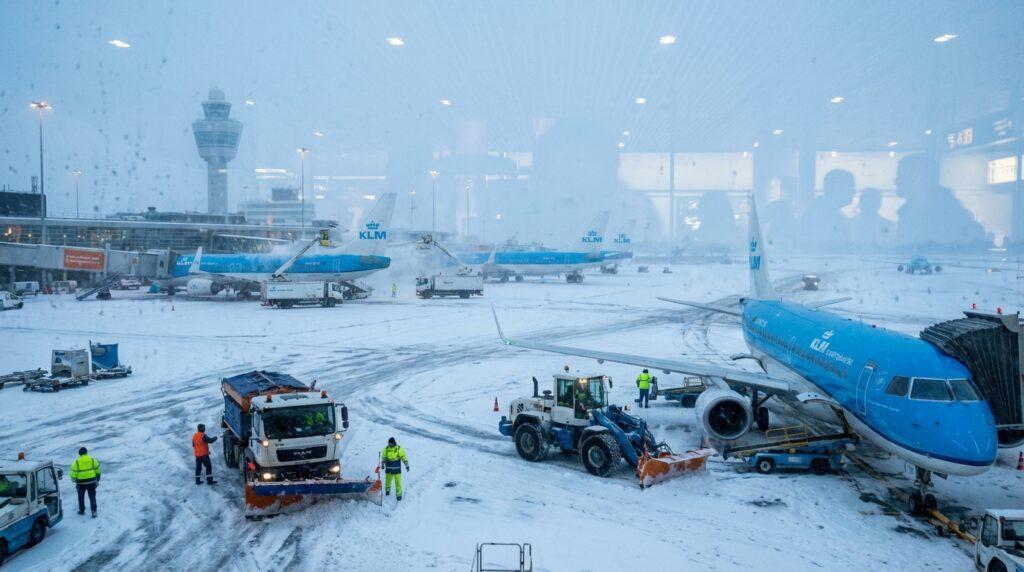
In the first week of January 2026, Amsterdam Airport Schiphol suffered major disruptions. Heavy snowfall, icy conditions and strong winds led to the cancellation of over 3,200 flights in just a few days. The airport's operational capacity, normally capable of handling up to 120 aircraft movements per hour, was reduced to around 30, due to snow-covered runways, restricted taxiways and prolonged de-icing operations. In some cases, the airport even had to suspend operations altogether, prompting diversions to other hubs.
Causes of disruption
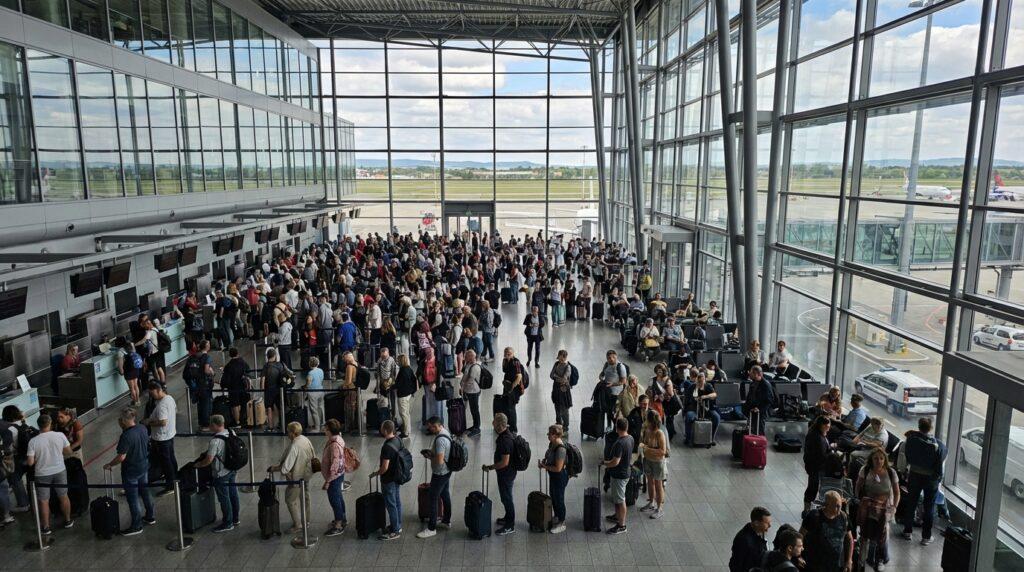
Several factors contributed to this operational chaos. The ground traffic management proved to be complex, with «taxiing to nowhere» situations where aircraft were stuck on saturated taxiways. The process of appliance defrosting also showed its limitations in the face of severe weather. These difficulties led KLM to cancel hundreds of flights, leaving thousands of travelers stranded in terminals, some even having to spend the night on cots set up for the occasion.
An in-depth assessment by Oliver Wyman
To carry out this critical analysis, Schiphol and KLM commissioned the international consulting firm Oliver Wyman. This choice is explained by the firm's reputation in the aeronautical sector and its expertise in operational audits. The aim is to scrutinize the efficiency of operational and communication processes during winter conditions.
Areas for improvement
The joint assessment focuses on several crucial aspects:
Runway capacity and ground traffic management
The analysis will focus on optimizing the use of runways in degraded conditions, as well as improving the flow of ground traffic to avoid congestion.
Effective defrosting and winter maintenance
De-icing procedures will be reviewed to improve speed and efficiency, and reduce aircraft waiting times on the ground.
Communication and passenger experience
Visit communication with passengers will be reinforced to better inform them of disruptions and their rights. Another priority is to improve the reception and handling of passengers stranded at the airport.
Cooperation between platform players
Better coordination between the various entities operating at Schiphol (airlines, handling services, air traffic control, security services) is essential for smoother crisis management.
A report due by the end of March
Oliver Wyman's findings and recommendations will be forwarded to the Dutch Ministry of Infrastructure and Water Management by the end of March 2026. The report will form the basis for new procedures and action plans designed to prevent similar disruptions in the future and ensure greater operational resilience in the face of climatic challenges.
Flywest: Anticipating tomorrow's challenges
At Flywest, we keep a close eye on developments in the airline industry. The events at Schiphol are a reminder of the importance of proactive risk management, This is particularly true in the context of climate change. Investment in appropriate infrastructures, innovative technologies and ongoing training of our teams is essential to ensure the safety and continuity of flight operations, while placing passenger comfort and serenity at the heart of our priorities.
Be the first to comment on this article