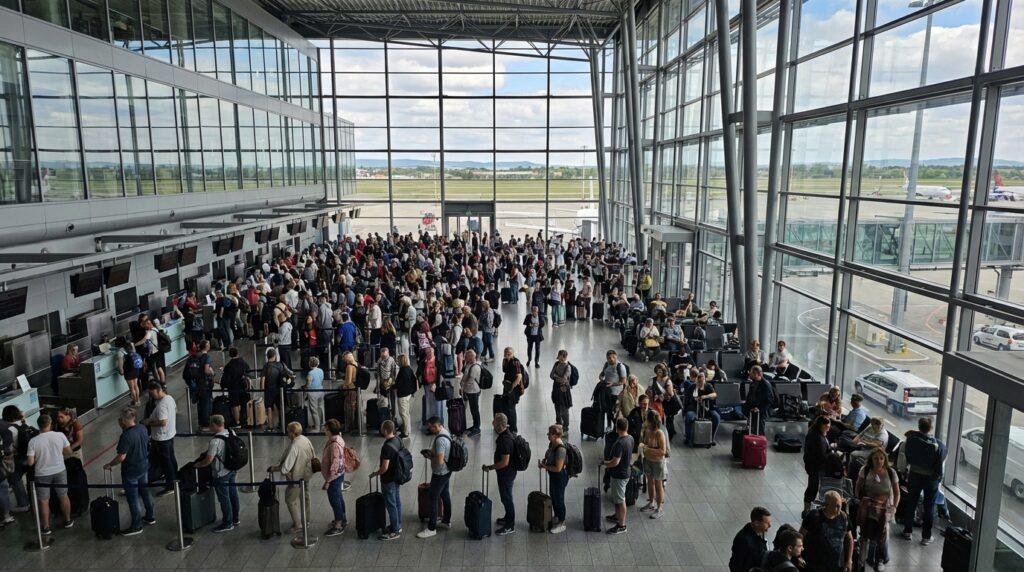
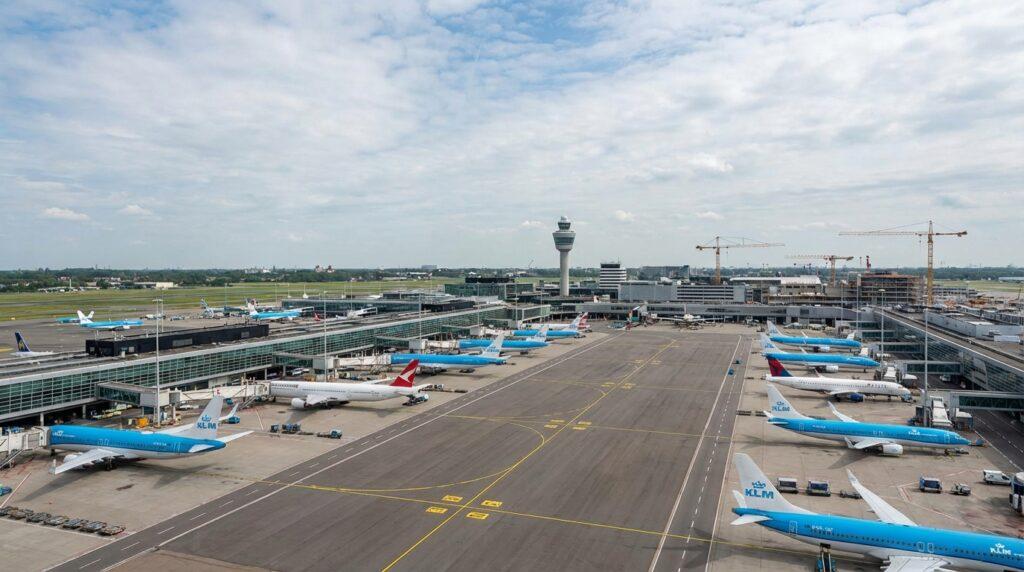
The airport ofAmsterdam-Schiphol confirms its position as major European hub 68.8 million passengers by 2025. This performance represents a increase of 2.9 % year-on-year, underlining the vitality of air traffic despite a fluctuating economic and geopolitical context. With 477,552 aircraft movements, an increase of around 1 %, Schiphol is demonstrating its ability to handle a growing volume of operations while strengthening its network.
First-rate European and intercontinental connectivity
Schiphol stands out for its vast network of destinations, connecting the Netherlands directly to 301 cities on five continents, including 125 intercontinental routes. This exceptional connectivity has earned it international recognition: the airport is ranked second in Europe for direct connectivity and third for its hub function, according to ACI Europe's Airport Industry Connectivity Report 2025. These rankings testify to its central role in global air travel.
Mainly European traffic, with Spain in the lead
Of the 68.8 million passengers handled, 43.6 million used Schiphol as their departure or arrival airport, while 25.2 million travelled on a correspondence, consolidating its status as a transit hub for KLM and its partners. Intra-European flows dominate, with 48.9 million passengers, while intercontinental routes account for 19.9 million passengers. Spain is the leading destination market, ahead of the UK, followed by Italy, the USA and Turkey. This dynamic trend is part of a overall recovery in European traffic, which rose by 7 % in 2025.
Environmental commitment and the transition to quieter aircraft
In addition to traffic growth, Schiphol is focusing on reducing its noise footprint. The share of flights operated by aircraft classified in the lowest noise categories reached 32.6 % between April and December 2025, an increase of 8.8 points. This trend is supported by a differentiated airport fee structure, This will favour newer, quieter aircraft. Forecasts predict a significant reduction in noise, of 15 % during the day and 32 % at night, for a comparable number of movements.
Limiting night flights and optimizing flows
Schiphol's fare policy also aims to limit night flights, This is a sensitive issue, due to environmental constraints and political debates on capping movements. The airport thus seeks to reconcile economic development with quality of life for local residents, an essential balance for a major European hub.
Freight business down slightly but supported by investments
The cargo segment recorded a slight decline, with 1.43 million tonnes handled in 2025, down 4 %. This trend is partly explained by a contraction in volumes in the first half of the year. However, the’freight ecosystem continues to invest, as in the case of Swissport's new T12 terminal, which increases its handling area to 40,000 m². These investments confirm Schiphol as a logistics hub essential for e-commerce and high value-added freight in Northern Europe.
Outlook and rate stability
Data for 2025, although provisional, point to a solid year for Schiphol. The airport has also made the strategic choice of freeze airport charges for 2026, This follows a significant increase in 2025. The aim of this measure is to maintain the attractiveness of the hub for airlines and to promote stability in a constantly evolving sector.
Be the first to comment on this article
On the same topicaéroport
- Schiphol freezes its charges for 2026: what impact on ticket prices and competition between European hubs?
- Ground-breaking ceremony for the new quick-stop zone at Brussels airport
- Rome Fiumicino airport named best airport in Europe by ACI
- amsterdam-schiphol airport plans 37% tax increase over next three years
- All you need to know about a boarding pass: the essential information it contains
- Geneva Airport expands its range of far-flung destinations