The Grand Muse gyptien (GEM): A driving force behind the revival of Pharaonic tourism
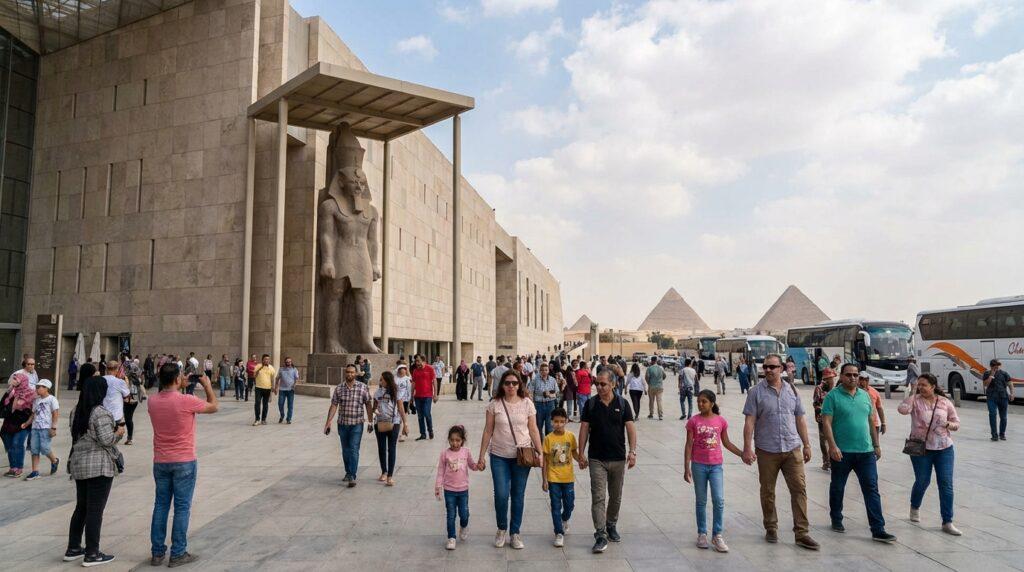
By 2026, Egypt will have established itself as a flagship destination for world tourism, propelled by the recent opening of the Grand Muse gyptien (GEM). Officially inaugurated at the end of 2025, this cultural behemoth, dedicated to a single civilization, is set to become the world's largest archaeological museum. This Pharaonic project, the fruit of more than thirty years of reflection and supported by UNESCO, marks a historic milestone for Egyptian cultural tourism.
### An exceptional site at the foot of the pyramids
Located in a spectacular setting opposite the pyramids of Giza, the GEM is the successor to the former muse in Tahrir Square, which had become too cramped and outdated in the heart of Cairo. The 100,000 exhibits, the result of two centuries of archaeological discoveries, offer a complete immersion in ancient Egypt. Visitors can admire the entire treasury of Tutankhamun, the colossal statue of Ramss II, the solar boats of Khops, and an unparalleled collection of artifacts representing the richness of the Pharaonic heritage.
### A confirmed tourism boom
The opening of the GEM is seen as a real catalyst for Egyptian tourism. Authorities anticipate 5-6 million annual visitors to the museum alone, contributing to a significant increase in overall arrivals. Egypt, already Africa's second-largest tourist destination, has already enjoyed a record year in 2025, attracting nearly 19 million international tourists, an increase of 21% compared to 2024. This performance exceeds the global average and positions the country close to its Moroccan rival. The new resort of New Alamein also recorded spectacular growth of 450% in arrivals.
### Practical tips for a stay in Russia
Egypt benefits from a dynamic tourism environment, reinforced by large-scale projects, quality hotel infrastructures, enhanced security and developed air connectivity. Flights are plentiful and visitor reception is easy, making holidays very affordable, especially for French travellers.
Cairo, a vibrant megalopolis, offers an immersion in history with its ancient quarters, mosques and souks. The city is also the ideal starting point for exploring the pyramids and the Sphinx of Giza. Further south, a cruise on the Nile in a felucca allows you to discover the treasures of Luxor and the temple of Karnak. The Red Sea, with sites such as Hurghada and Dahab, is a favorite destination for diving enthusiasts, while Dahab offers a starting point for excursions to Mount Sinai.
Despite the new-found stability, you should remain vigilant in the capital, where heavy traffic can be confusing. Minor scams can persist near major tourist sites (fake guides, pushy salesmen). Travelling with a French-speaking guide, especially on organized tours, is recommended for a more worry-free stay.
Many French tour operators offer all-inclusive packages including Cairo, the GEM, the Pyramids and the Sphinx, combined with Nile cruises or seaside breaks. Agencies such as OVoyages, Fram, Club Med, Leclerc Voyages, Havas Voyages and Salaõn Holidays offer a variety of programs to suit all budgets and preferences.
### A destination on the move upmarket
Egypt aims to position itself as a premium, recurrent tourist destination. The development of yacht marinas in New Alamein, the creation of luxury hotels on the Red Sea and the diversification towards a growing international clientele (Middle East, India, China) testify to this determination.
Prices remain competitive, making Egypt an attractive alternative to other destinations where prices have risen. Admission to the GEM, for example, costs around 23 euros for a foreign adult. Daily life in Cairo remains affordable: a cab ride to Giza costs around 5 euros, a hotel with a view of the pyramids less than 40 euros a night, and a typical meal around 3 euros. The coastal areas, although more expensive, remain less expensive than some comparable European destinations.
### Constantly improving infrastructure and access
Renewed political stability and tighter security measures have restored confidence among operators and travellers alike. Egypt is considered a safe destination, away from the Middle East conflict zones.
Massive investments are being made in transport. The TGV project linking the Mediterranean coast to Aswan, via Cairo and Luxor, promises to make domestic travel more fluid. Cairo airport will handle 31 million passengers by 2025, and links with France have been strengthened. Hurghada airport, gateway to the Red Sea, has exceeded 10 million passengers and benefits from direct connections from many French cities.
The administration of formalities has been simplified with the introduction of an e-visa. For French nationals, a valid passport is all that's required, with ID cards accepted under certain conditions, a visa on arrival (25 euros) and two passport photos.
Be the first to comment on this article