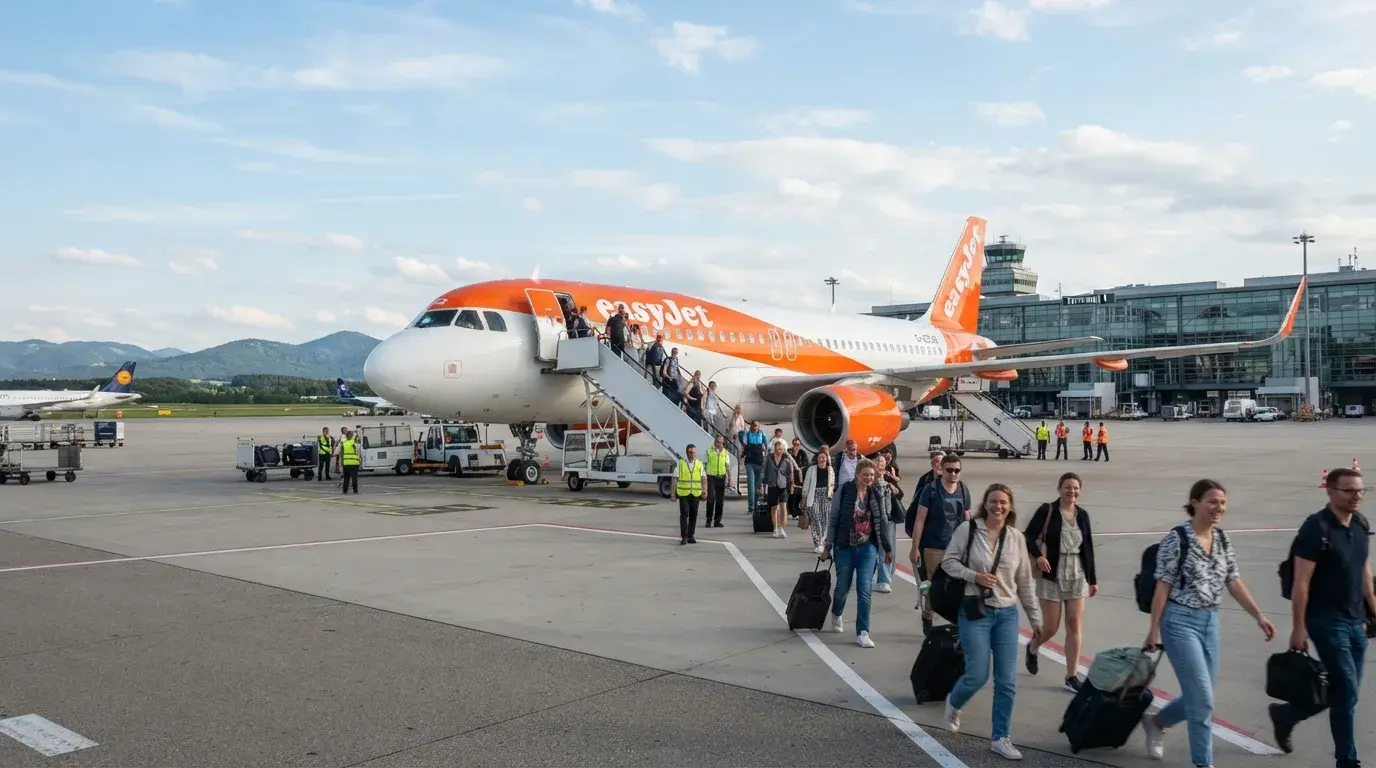
Greece 2026: Airports Smash Records with Over 60 Million Passengers – Here’s Why
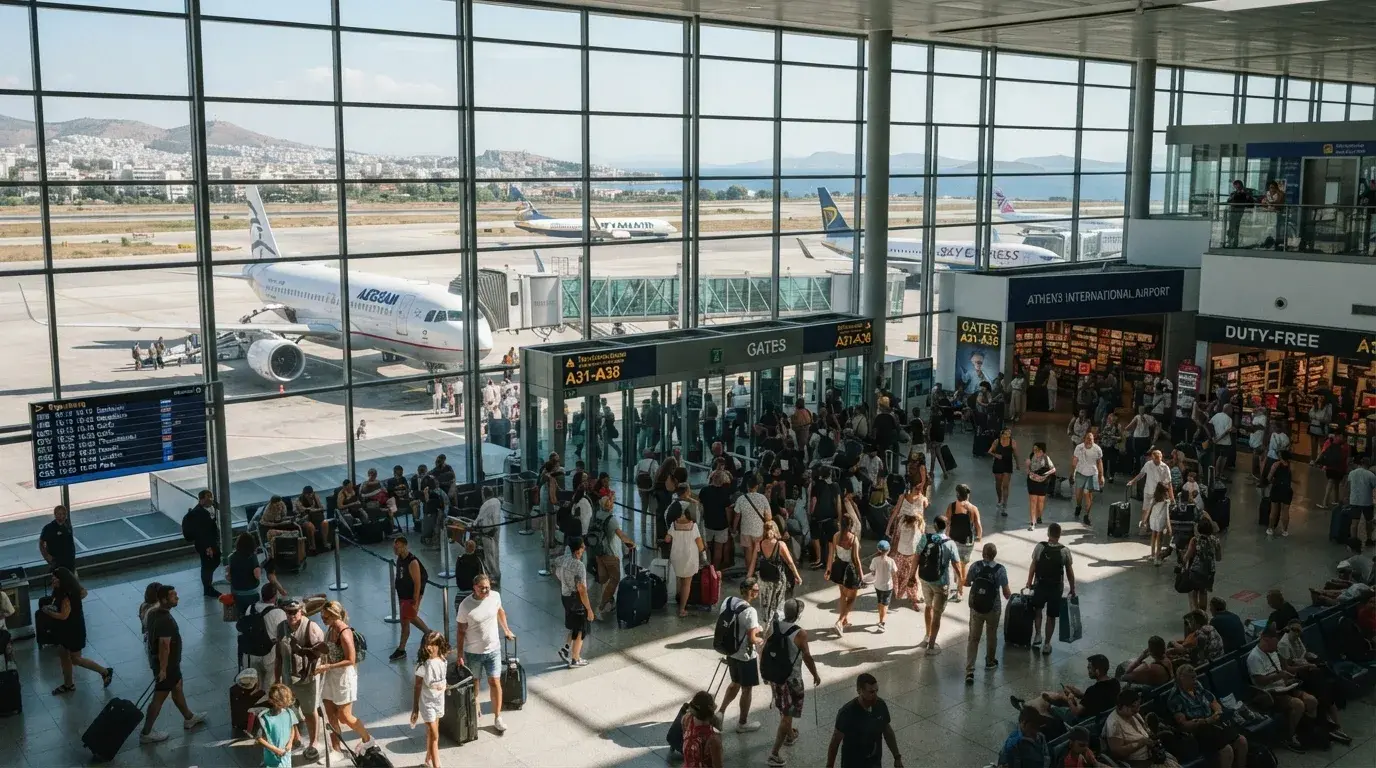
Greece shattered records in 2026, transporting over 60 million passengers between January and August. This unprecedented feat stems from a combination of factors: an exceptional tourism season, increasingly sought-after island destinations, and highly efficient airport management. Athens, the country’s primary hub, even surpassed the symbolic threshold of four million passengers in a single August month. This surge raises a key question: how does this small Mediterranean nation attract such overwhelming air traffic, while other European destinations struggle to recover pre-crisis levels?
Figures published by Greek aviation authorities—pending final consolidation—reveal a 4.5% increase in air traffic compared to the same period in 2025. This growth outpaces the most optimistic forecasts, placing Greece on an unprecedented trajectory. Fraport Greece, operator of 14 regional airports including Corfu, Rhodes, and Santorini, reported a 5.3% rise over the first eight months of the year. These results stand out even more when compared to major European hubs, which are often stagnant or experiencing slight declines.
This success is built on a well-honed strategy: the massive internationalization of traffic. Over 23 million passengers have transited through Athens-Elefthérios Venizélos since the start of the year, with the majority traveling to or from abroad. Regional airports, meanwhile, show an even stronger dependence on international visitors, with 6.2 million travelers in August across the entire Fraport network—over eight times the volume of domestic traffic. France, with 230,000 passengers recorded in August, ranks among the top European contributors to this momentum.
The pivotal role of Athens, the Mediterranean’s new gateway
Athens plays a central role in this rise. Elefthérios Venizélos International Airport, already Greece’s largest, handled 23.71 million passengers in the first eight months of 2026, up 4.4% year-on-year. International traffic, the engine of this growth, increased by 4.4%, while domestic traffic saw a slight rise of 4.3%. This performance is all the more notable as aircraft movements also grew by 3.9%, signaling optimized rotations and better flow management.
August 2026 will go down in the books: for the first time, the airport surpassed four million monthly passengers, processing 4.03 million travelers. International passengers accounted for 2.88 million of these, up 4.3%. This record attendance reflects the enduring appeal of the Greek capital, as well as its role as a hub for connections to the islands and neighboring destinations. Greece is leveraging this centrality to boost its attractiveness against competitors like Spain or Italy, which are struggling to regain their pre-pandemic dynamism.
The data also reveals evolving travel behaviors. International passengers now favor shorter but more frequent trips, with a marked preference for island destinations accessible directly from Athens. This trend is reflected in increased frequencies on international routes, particularly from Western Europe and the UK.
Island airports in overdrive: Corfu and Heraklion lead the way
Fraport Greece, which operates some of the country’s most iconic airports, perfectly illustrates this trend. The regional network welcomed 27.71 million passengers between January and August 2026, up from 26.31 million a year earlier—a 5.3% increase translating to 1.4 million additional travelers. August was particularly busy, with 7.13 million passengers, up 5.1%. International traffic dominated, with 6.2 million travelers compared to just 968,000 domestic.
Among the top-performing airports, Corfu surpassed the one-million-passenger mark in a single August for the first time. This milestone underscores the enduring appeal of this Ionian island, renowned for its unspoiled landscapes and rich history. Heraklion in Crete also broke records: August 1, 2026, became the busiest day ever recorded, with 68,818 passengers processed. By mid-August, the airport had handled 6.81 million passengers since the start of the year, up 4.6%. International arrivals rose by 5.1% to 2.88 million, confirming Crete’s enduring appeal to European tourists.
These results highlight a key reality: Greece is now banking on a volume-driven strategy rather than seasonality. Island airports, long dependent on summer flows, are now recording stable year-round performance thanks to diversified market strategies and improved connectivity. France alone accounted for 230,000 passengers in the Fraport network in August, a figure that continues to rise.
A model to follow for Europe?
Greece exemplifies a strong trend in Europe: the resilience of air travel amid successive crises. While other countries struggle to recover pre-pandemic levels, Greece is experiencing steady growth, driven by unrelenting international demand. The 83.33 million passengers recorded in 2025 already set a record, and 2026 is shaping up to be even more exceptional.
Several factors explain this success. First, a strategy of market diversification. Greece is no longer relying solely on classic summer tourism but is now targeting varied clientele: business travel, short urban stays in Athens, medical tourism, and cultural or sporting events. Second, the modernization of airport infrastructure, with massive investments in terminals and equipment to handle ever-growing flows. Finally, an attractive pricing policy combined with a diverse hotel offering, enabling Greece to attract a broad spectrum of travelers, from backpackers to premium visitors.
For French travelers, Greece is now a credible alternative to Spain or Italy. Direct routes from Paris, Lyon, Marseille, or Nantes, coupled with often competitive ticket prices, make it an accessible year-round destination. Low-cost carriers, in particular, have played a key role in democratizing travel, with round-trip flights available for under €50 in the off-season.
Facing this growth, Greece must now tackle a new challenge: turning this seasonal momentum into sustainable development. Congestion at major airports like Athens or Heraklion, as well as pressure on island infrastructure, could become mid-term constraints. For now, however, the country boasts an enviable air traffic health, one that commands admiration in an industry often plagued by uncertainty.
For travelers seeking sunshine, history, or simply a change of scenery, Greece has it all—and the numbers prove it.
To plan your next trip, explore flight offers from airlines serving Greece from France, as well as accommodation options for all budgets. Flywest provides a selection of the best flights and stays to explore this fascinating country.
Be the first to comment on this article